Eight hundred feet of elevation gain. That's become my real ceiling this year — not a figure any doctor handed me, but the point where my knees stop being quiet about my plans. Joint mobility after fifty doesn't care how many trails you logged in your twenties; mine didn't start raising objections until the climbing got serious. Active aging, it turns out, is less a victory lap and more a running negotiation, and most of what I know about managing it came from questions other hikers kept lobbing at me rather than some tidy personal transformation story.
People ask me the same handful of things over and over, usually while we're both catching our breath at a trailhead or texting each other photos of swollen ankles after a long weekend. So instead of another walk-through of my whole saga, here are the actual hiking tips I give them — the real questions, answered the way I'd answer a friend.
Do Trekking Poles Actually Save Your Knees, or Is That Marketing?
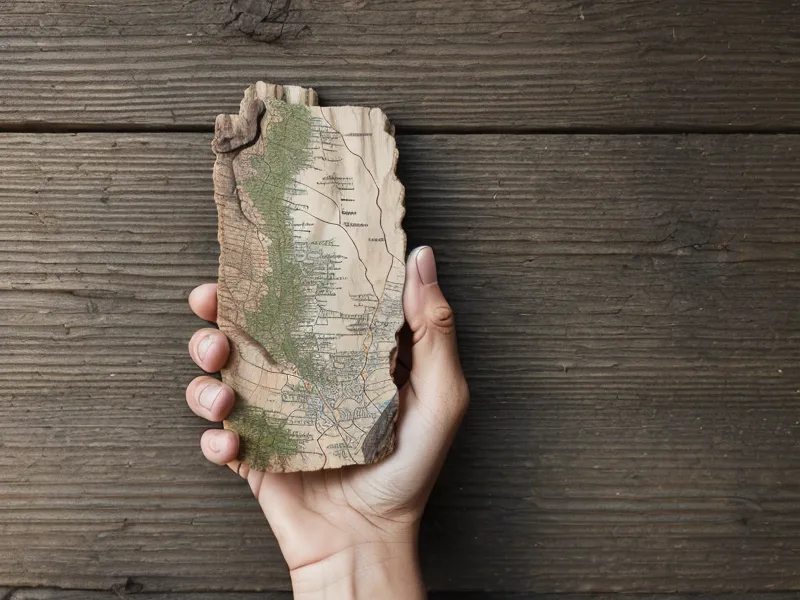
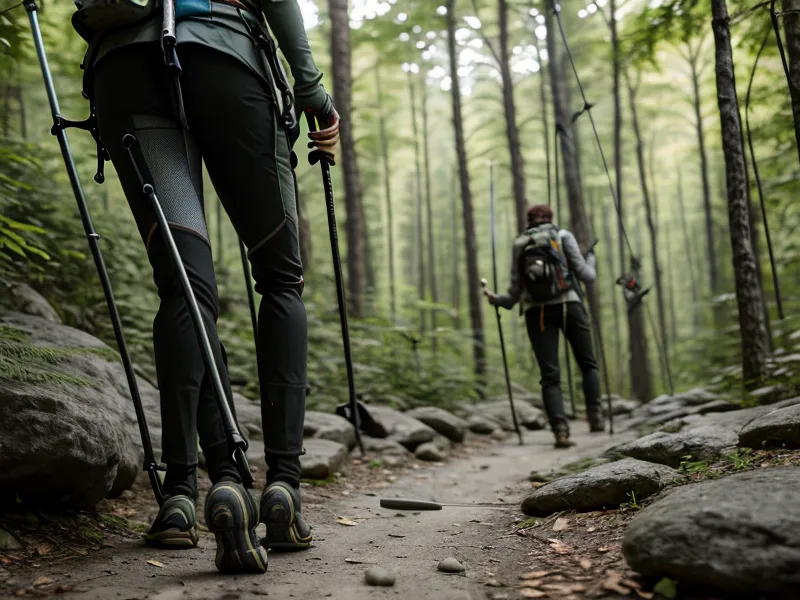
Short answer: yes, and not in a subtle way. I resisted poles for years because I associated them with people twenty years older than me, which says more about my ego than it ever did about my knees. On a steep downhill grade, poles can cut the compressive force on your knees by something like 25 percent, and once you feel that difference you stop caring how it looks. What's actually happening is weight redistribution — the poles take load that would otherwise land straight through your knee and send some of it through your arms and shoulders instead. That matters most on the way down, when your leg muscles are braking every single step rather than just lifting you up, which is a completely different kind of strain than the climb itself. If you're picturing the big regional Blue Hills Reservation twenty minutes from here. That one's lovely, but it's not mine anymore. I moved my regular Saturday loop to a flatter, quieter stretch I just call Skyline Trail, and that's where all of this actually got tested.
What About Custom Orthotics — Worth It?
This is the other question I get constantly, usually from someone standing in a shoe store looking faintly panicked. I tried custom orthotics a couple of winters ago when I had my feet scanned and molded, waited weeks for them to arrive, wore them faithfully through a whole hiking season. They didn't help. If anything, they changed how my foot sat inside the shoe enough that my ankle started compensating in a new and unhelpful way, and I was back in my regular insoles by spring. That's not a knock on orthotics in general; plenty of people swear by them. For my specific mechanics, though, a molded piece of plastic wasn't solving a problem that was actually happening higher up, in how my hip and knee were sharing the work. A brace or an insert can hold a joint where you want it for an afternoon, but it doesn't build the muscular stability that keeps it there on its own. That distinction took me a genuinely expensive season to learn the hard way. There's also a real difference between cartilage that's thinning and a joint that's simply under-lubricated, and an orthotic does nothing for either one directly — that's a deeper topic than a shoe insert was ever going to fix.
The Shoe Question Everyone Asks First
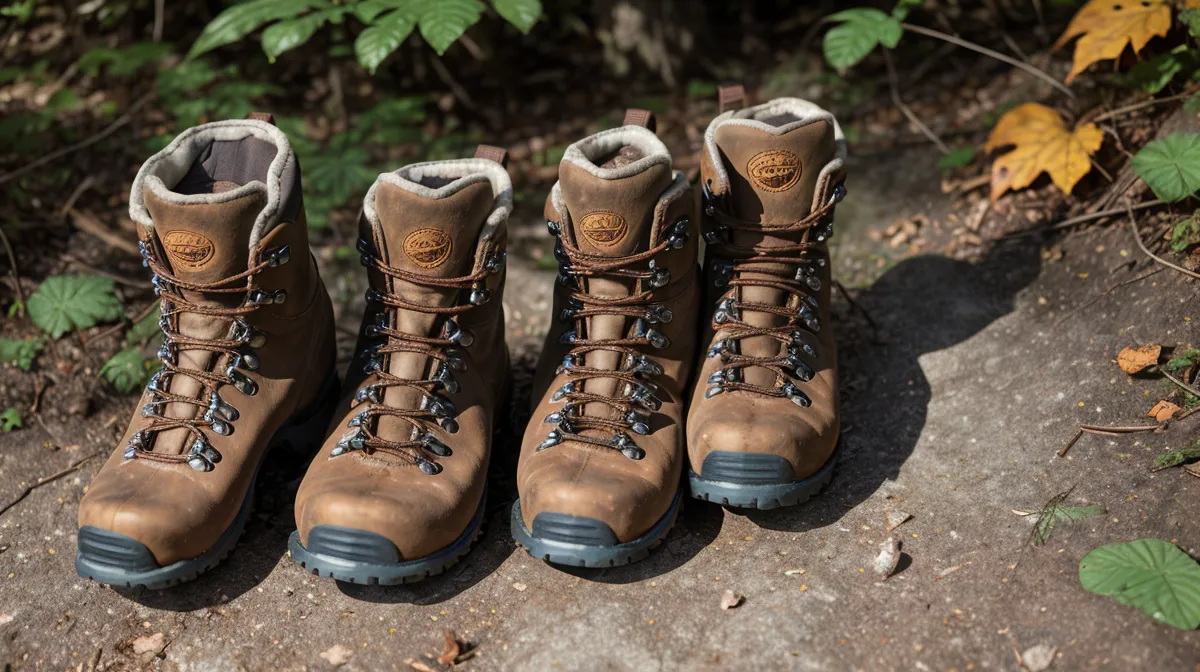
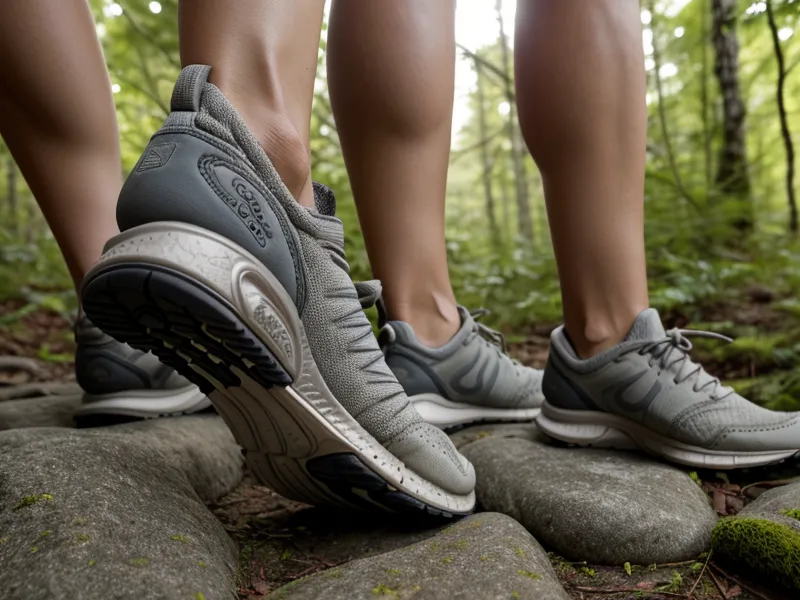
Right after poles, people want to know about shoes, and here's my honest answer: softer and lighter beat sturdy and heavy, pretty much every time, at least for my knees specifically. I switched from stiff leather boots to low-profile trail runners with almost no heel-to-toe drop, which felt strange at first, like standing closer to the ground than I was used to, but it meant my ankle had to actually do its job instead of relying on a wall of leather to do it for me. Heavier footwear is extra load your joints carry with every single step, which is its own rabbit hole some other hikers have written entire posts about. The cushioning inside a midsole also quietly breaks down long before the tread looks worn, which nobody mentions when you're buying the shoes — worth reading up on separately if you want the full picture. My rule of thumb is simple: if my feet feel heavy before the hike even starts, the shoes are wrong, and no amount of stubbornness fixes that. I've made my peace with trading summit ambitions for sturdier, lighter soles, and it's a trade I'd make again without hesitating.
The Low-Impact Case for Power Over Flexibility
Everyone assumes the fix for stiff joints is more stretching, and for years I believed that too. Stretching helps, but it isn't what stopped my knee from buckling on loose rock. That came from working on power instead, short bursts like stepping up onto a bench or a quick lunge, rather than slow, sustained holds. Mobility and flexibility get used like synonyms, but they're not measuring the same thing, and chasing one doesn't automatically get you the other. Fast-twitch muscle fiber is the first kind we start losing as we age, and it's specifically the type responsible for catching yourself before a stumble turns into a fall. You can build real strength this way without a single high-impact rep: no jumping, no pounding pavement. That surprised me more than almost anything else in this whole process. There's a stretch I do most evenings that targets a nerve running down the front of the hip; I won't pretend to understand the full mechanism, but I notice the difference the next morning on the trail regardless.
How Do You Know It's Actually Working?
This is the hardest one to answer honestly, because there's no single test, no number on a chart that proves anything. For me the proof showed up sideways. I'd restocked my car's glovebox with ibuprofen at the start of the season, out of habit more than need, and sometime in the middle of it I opened that glovebox for something unrelated and just stared at the same bottle, seal still unbroken, sitting exactly where I'd left it months earlier. I hadn't reached for it once. That told me more than any pain scale could have. A clicking or popping knee isn't automatically a sign of damage either, something that took me a long time to stop panicking about, and there's a real difference between adapting how you move and quietly giving up on moving at all, even though some mornings the two feel identical from the inside. There's fluid inside every joint doing its own quiet lubricating work, and exactly how that shows up as stiffness during the first few minutes of a walk is its own topic, one I'll let stand on its own rather than trying to explain the mechanics here.
Kathleen's Supplement-Timing Question
Kathleen, from my Wednesday-night walking group, asks the most precise version of this one. She wants to know exactly when to take things relative to a hike, before or after, morning or evening, like there's a perfect sequence hiding somewhere nobody's told her about. I don't have a precise answer, and your own doctor is a far better source for that kind of timing than I am. What I can say is that whatever you're taking works alongside the physical changes you make, not instead of them. A supplement was never going to replace the actual mechanical work of moving differently on the trail. Food plays its own role too; what's on your plate adds to or subtracts from how inflamed your joints feel day to day, which is a bigger conversation than I can do justice to here. Kathleen usually sends these questions in the evening, around the time I'm sitting at the corner desk in my back bedroom with a heating pad settled across both knees, trail shoes still drying on the card table next to me and the window gone dark over the fence outside. Half the time I'm scrolling trail reviews instead of actually answering her right away.
Picking the Trail That Lets You Keep Hiking
My regular hiking partner, Maureen, still lobbies for the longer loop almost every single Saturday, even on the mornings her hip is clearly not on board with the idea, some things about a twenty-year friendship don't change just because the knees did. We compromise more than we used to. Sitting at a desk all week does more damage to hip mobility than any one hike could undo, which is an annoying thing to accept when your job involves a lot of sitting, so I've started scheduling our hikes for early afternoon instead of first thing in the morning, my joints are simply a different animal a few hours in than they are right out of bed. I've genuinely gotten my weekend hikes back by making those unglamorous adjustments instead of white-knuckling through pain. When I do overdo it (and I still do, more than I'd like to admit), I've learned how to handle a knee that swells up after a hike without spiraling about it, and I've written elsewhere about exactly what that stiff, rusty-hinge feeling is like first thing in the morning. If there's one thing I want another hiker to take from all of this, it's that the trade isn't elevation for nothing. It's elevation for more hikes, period, spread out over more years than my knees were ever going to give me if I'd kept insisting on the summit every single time.