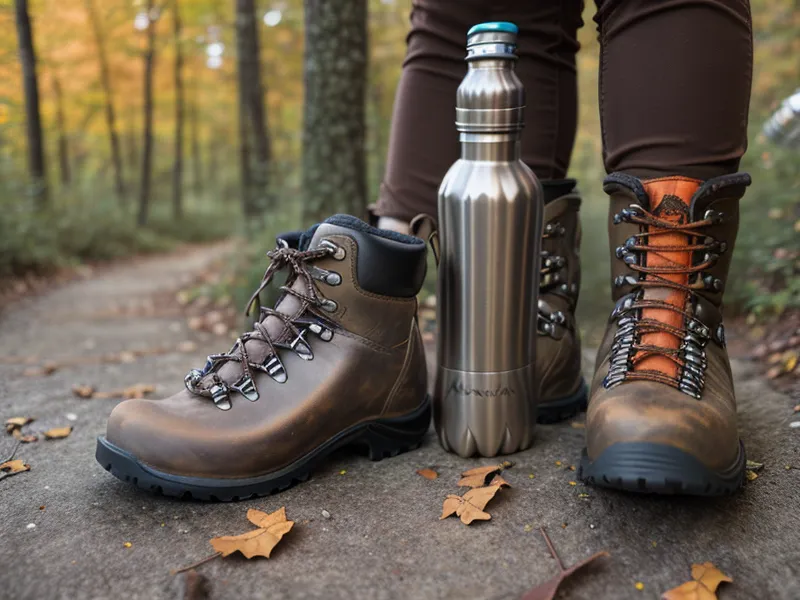
My left knee doesn't crack anymore when I stand up from my desk. No dry, rice-krispie pop, no stiff first few steps like my joints need a running start before they'll cooperate. That sound used to be part of my day, right up there with the printer jamming on a predictable schedule. For years I assumed the fix for aging knees was simple: more low-impact cardio, keep moving, don't let the joint sit still. Swim more. Walk more. That's the advice everyone hands you once mobility after 50 turns into a daily negotiation instead of a given. It's not wrong, exactly. It's just missing half the story, and figuring out the missing half is what actually rebuilt my knee-health routine.
Here's the thing about that advice: it treats every ache the same way, like cardio alone is a universal patch for a joint that's asking for something more specific.
The 'Just Swim More' Advice
The standard line for anyone over fifty with cranky knees is some version of: go for a swim, hop on the elliptical, take a long walk. Those aren't bad ideas. But they're incomplete, and nobody explains why.
I had a real conversation with my doctor about joint pain and aging a while back, and it reframed how I thought about the whole problem. Cartilage isn't like muscle — it doesn't heal the way a sore hamstring does, and it doesn't respond to the same kind of general movement that keeps your heart rate up. There's a real difference between cartilage that's genuinely thinning and a joint that's just running low on lubrication, and they don't get fixed the same way — though that's a deeper topic than I can do justice to here.
Is Low-Impact Cardio Actually Enough?
Cardio keeps articular cartilage moving, which matters — a joint that never moves at all is worse off than one that does. But moving through a range of motion over and over isn't the same as loading a joint under steady pressure, and that distinction is where the standard advice runs out.
My office switched me over to a standing desk at one point, convinced it would take pressure off my knees the way it's supposed to help your back. It didn't. Standing still at a keyboard bothered my knees just as much as sitting did, maybe more, because sitting at least let me shift my weight without thinking about it. I gave the standing desk a real shot before quietly going back to a chair for most of the day.
There's a real gap between sitting still all day and expecting your knees to perform on a trail on the weekend, and no amount of extra walking closes that gap by itself. Something else has to fill it.
What Steady Tension Does That Laps Don't
What actually changed things for me wasn't more cardio. It was adding holds — positions where the knee stays still under a steady load for a stretch, instead of moving through the same motion over and over.
A wall lean held at a shallow angle works the knee under a different kind of load than pool laps or another elliptical session ever did — something to do with synovial fluid, though the mechanics of that are their own conversation for another article. This is mobility work, not flexibility work, and mixing the two up is its own trap worth unpacking separately.
Whether something like JointVive is better than collagen for maintaining joint health is a comparison I've gone down the rabbit hole on before, though it's a separate question from the tension-and-hold approach — supplements and mechanical loading aren't solving the same problem.
My Modified Routine, In Order
Most of this now happens a few feet from where I'm typing — I've got a card table wedged beside my desk in the back bedroom that's become a gear-testing bench, currently holding a pair of trail shoes I still haven't decided about. There's a corkboard on the wall with a trail map gone soft at the corners from too many sticky notes, and a window that looks out at nothing more exciting than the neighbor's fence. Resistance bands sit in a basket by the door, close enough that skipping the routine takes more effort than doing it.
The wall hold comes first: lean back, slide down a few inches, nowhere near a full squat, just enough to feel the quads engage, and stay there. Then a straight-leg lift on the floor, one leg extended, lifted maybe six inches, held until it shakes a little. Then controlled gliding — a sock on the hardwood, or a furniture slider if you have one, sliding the leg out and back slowly, low-friction and fully controlled the whole way. None of it looks like exercise from across the room. All of it is.
Some of what makes the leg lift work ties back to activating the nerve that runs down the front of the hip, which is its own rabbit hole for another time.
What I eat plays into overall joint swelling too, though that's its own separate piece of the puzzle I won't try to squeeze in here. And walking for stiff joints is better in the afternoon, once the joint has had a chance to loosen up naturally through the day — I learned that one the hard way after a string of miserable early walks.
Ask What Your Knee Is Actually Missing
The loop through Middlesex Fells isn't flat, but it isn't brutal either — a stretch of trail with just enough incline to test whether all those living-room holds actually transfer to real ground. Two years of trading extra cardio for controlled holds has taught me one thing clearly: the knee that used to announce itself on every downhill step stayed quiet the whole way.
My hiking partner, Maureen Callahan, still lobbies for the longer loop every single time, even on days her hip is clearly not on board. Watching her push for more distance used to make me feel behind. Now I think we're both just testing how far this actually holds up on real ground instead of a living room floor.
Getting out of the car after that hike, I just stood up. No bracing against the door frame, no slow unfolding, no waiting for my knee to sign off on the plan first. That's the part low-impact cardio alone never gave me, no matter how many laps I put in.
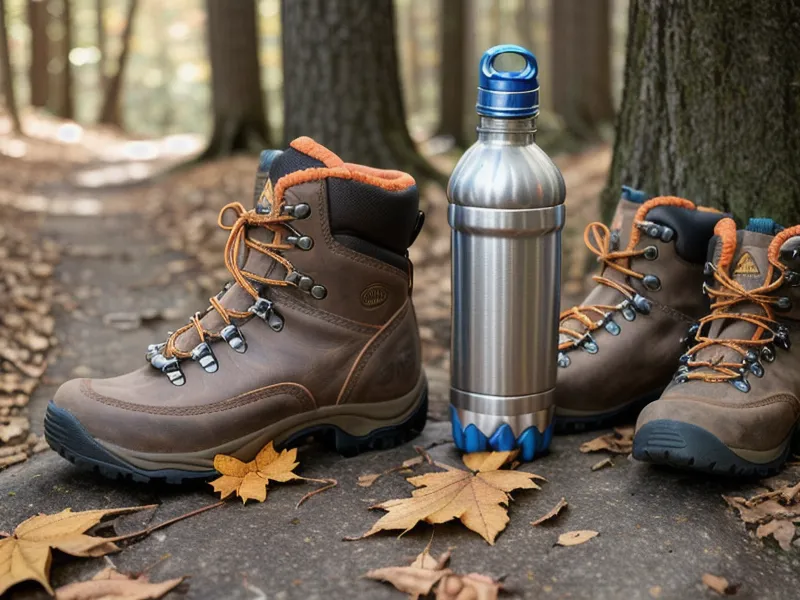
Poles redistribute a real amount of load off the knees on rough ground — that's its own topic worth reading up on separately. Old boots with worn-out cushioning don't do you any favors either, and how long that cushioning actually lasts is a whole separate rabbit hole.
So if you're stacking up more swims or more laps and your knees still complain, the cardio probably isn't the problem. Before adding another lap, ask whether anything in your week holds your knee under steady tension for half a minute at a time. If the answer's no, that's the gap — not your effort, and not your age. Knees don't stay ageless by accident; they stay capable because of what you ask them to do differently once running the same loop stops being enough.