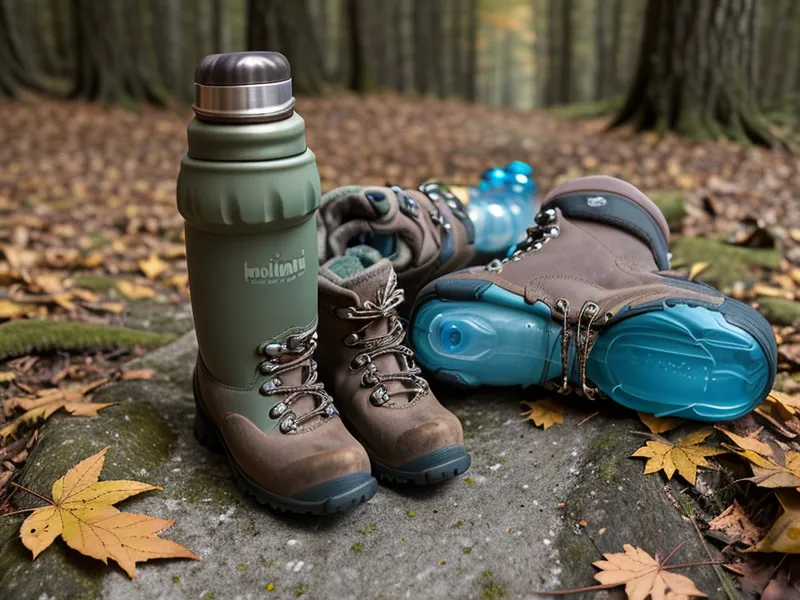
Seven activities show up on nearly every "low-impact for aging joints" list you'll find, and I only trust three of them with my own knees. That gap is the myth nobody corrects: low-impact fitness isn't one uniform category, so swapping hiking for any gentler-sounding option won't protect your joint health equally. Active aging means knowing which moves actually ask something of your body, not just picking whatever sounds softest for your mobility after 50.
Here's the thing - I'm not a doctor, a physical therapist, or anyone with letters after my name. I'm an office manager outside Boston who used to hike every weekend and had to renegotiate that relationship with my knees and hips. This post contains affiliate links, and if you buy through one I earn a small commission at no extra cost to you. I only mention things I've actually tried on my own joints, but run any real changes past your own doctor first, because what settled my hips might do nothing for yours.
The Low-Impact Fitness Myth That Nearly Sent Me to the Couch
Look, the assumption goes like this: hiking got hard, so anything gentler is automatically safe. My neighbor made that exact leap when his knees started complaining; he swapped his weekend running for tennis twice a week, sure he'd found the safe alternative. Tennis still asks you to plant hard and pivot on a loaded knee, so trading one demanding sport for another isn't the fix people think it is. The label "low-impact" gets stretched to cover anything that isn't running, when it should really describe how the joint experiences the motion, not how the activity looks from the sideline.
Before I sorted any of this out, I ground a foam roller into the front of my hip most nights, chasing that thick, spreading ache in the hip flexor and waiting for it to let go, convinced deeper pressure meant faster progress. It didn't fix anything. The roller loosened the muscle for maybe an hour, but the joint underneath was never the muscle's fault to begin with, and no amount of rolling changed how my hip actually loaded when I stood back up.
Finding Real Relief in the Water
The pool did more for my hips in one afternoon than stubbornly power-walking flat sidewalks ever managed. Water takes weight off a joint in a way pavement never will, and that difference showed up fast - I went from dreading every step to doing laps without that dull, bone-deep pressure trailing me home. It's part of why I keep pointing people toward trading ridges for laps as a real strategy, not a fallback for people who've given up on trails.
What Your Joints Actually Need Instead of Rest
Here's where I went too far in the other direction for a while: I got so committed to being "gentle" that I avoided anything resembling impact, including ordinary walks on pavement, and ended up stiffer for it. Controlled loading is what keeps a joint working, not the absence of load altogether; that's the real difference between an activity that removes impact and one that still gives your joints useful work, and most generic lists never make that distinction. Zero impact isn't the goal. The right amount, at the right pace, is.
My joints also needed more than muscle work and good intentions, which is where synovial fluid comes into the conversation; that's the natural cushioning inside the joint itself, and it isn't something a stretch or a bike ride fully substitutes for. I've been taking Joint Genesis [My Daily Pick] for a while now, one capsule folded into the morning I already had, and it's held up better than most things I've tried without demanding I remember multiple doses through the day. It's not a replacement for movement, though - supplements and mechanical work solve two different problems, and no capsule does the job your muscles are supposed to do.
Building Movement That Doesn't Feel Like a Consolation Prize
Sitting at a desk five days a week and then expecting your hips to perform on a hard Saturday hike is its own setup for trouble, and cycling became the piece that bridged that gap for me. It gives me a real cardio effort without asking my knees to absorb a downhill trail, and I've folded it into the week alongside the pool rather than instead of hiking.
Flat trails still matter to me, and I stopped being precious about using gear that felt like it was for someone else. Reading up on how to use trekking poles changed how much weight actually reaches my knees on an easy loop, even one with barely any grade to it. It felt strange leaning on poles on flat ground at first. Then I stopped caring what it looked like, because it kept me on the trail instead of on the couch.
Choosing Between Supplements and Movement
Some days the honest answer is both, and some days it's neither - it depends on what's actually bothering you. If clicking and morning stiffness are the main complaint, I've heard solid things about JointVive [Classic Approach], which leans on glucosamine and chondroitin alongside turmeric for people who've had good luck with that combination before. If you'd rather build strength than swallow another capsule, the home routine in Ageless Knees [No-Pill Option] is worth a look - it's exercise-based, it won't help a cranky hip or shoulder since it's built specifically around the knee, and it pairs fine with whatever supplement you're already taking. Neither one replaces the other, and neither one replaces just getting outside.
Getting Started with Low-Impact Fitness
These days the proof isn't dramatic. It shows up in small moments - climbing out of the car after a hike and just standing there, upright, no shuffling in place first to convince my hips the trip is actually over. That's the whole test. Not whether I can still do fifteen-mile ridge days, because I can't and I've mostly stopped mourning that particular number, but whether the ordinary parts of the day - standing, climbing out of a car, walking to the next thing - happen without negotiation.
Comparing this version of myself to the one who used to treat the Middlesex Fells like a personal gym isn't useful, and I've mostly let that comparison go. The activity list is shorter and gentler-looking from the outside, but the joints underneath are getting real work instead of a rest they never actually needed. If you want the longer version of how I stopped measuring myself against who I used to be, the trail ahead covers that part in more detail.
So skip the assumption that gentler automatically means better, and skip the guilt trip that comes with needing a gentler option in the first place. Try the water. Try a bike. Be honest about which activities on your list are actually low-impact and which ones just look that way from a distance. And if you want backup for the joint itself while you sort out the rest, Joint Genesis is where I'd start - not because it's magic, but because it's asked the least effort of me for what it's given back.