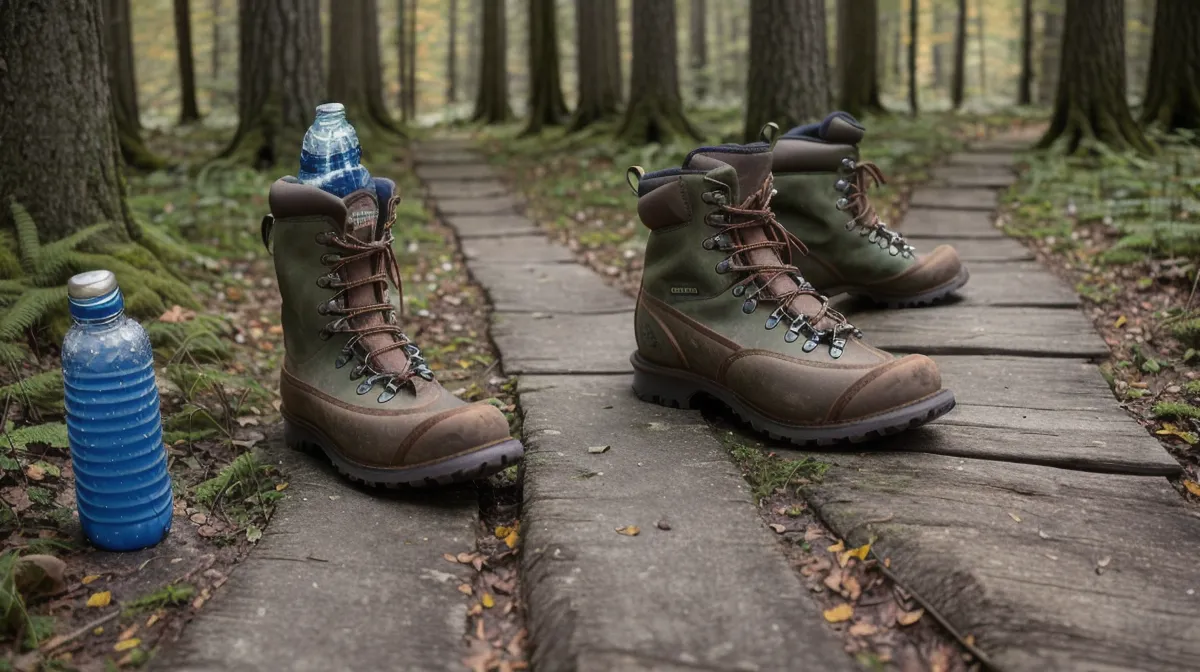
A cold hamstring stretch and a dynamic warm-up ask two completely different things of a fifty-something hip. One tries to lengthen a muscle before it's ready. The other tells the whole joint system to wake up and get moving. That distinction is the entire case for a real pre-trail warm-up instead of the old toe-touch-and-go routine, and it's the difference between joint mobility that holds up for miles and a first quarter mile that fights you the whole way. Active aging on the trail isn't about ignoring what fifty-plus joints need — it's about giving them a job to do first, and that job is the whole reason hiking longevity is even still possible for me.
Flexibility and mobility get used interchangeably, and they shouldn't. Flexibility is how far a muscle can stretch. Mobility is how well a joint moves through its full range while it's actually under control — the kind of control a loose rock or a root-crossed switchback demands. Dynamic warm-ups train the second one. Static stretching, at best, trains the first.
Why Static Stretching Doesn't Prime Older Joints for the Trail
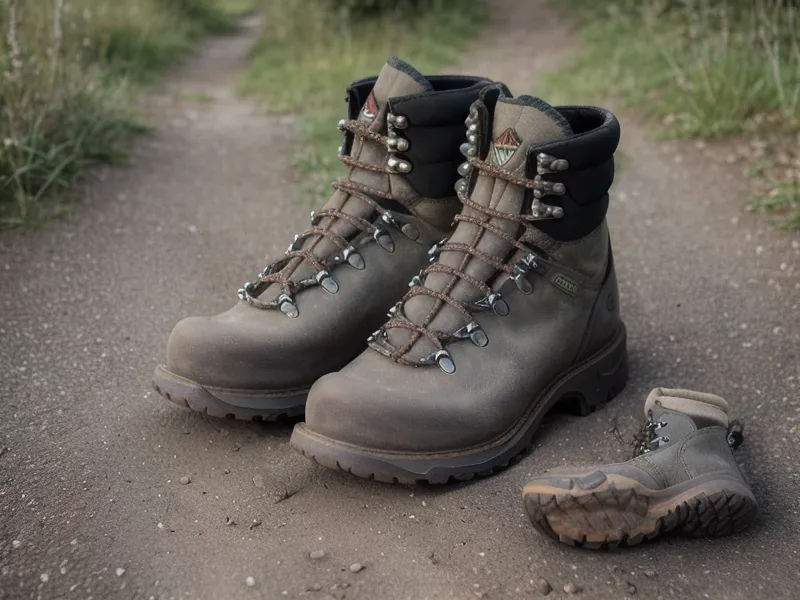
Ten minutes of standing at a trailhead trying to touch your toes feels productive. It isn't, at least not for a joint that hasn't moved yet. Pulling on a cold muscle stretches the casing around a joint that's still stiff without asking the joint itself to do anything. The synovial fluid in a hip or knee works better with real motion than with a held stretch, and a standing toe-touch just doesn't offer that. It's the piece most warm-up advice for older hikers skips entirely.
There's a trail network not far from where I hike with something like 125 miles combined — easy fire roads and technical single-track both — and every foot of it wants a body that's already awake before the first quarter mile. Priming a joint before it moves like that works better than stretching it beforehand: moving it the way the trail is about to ask, not just pulling on the muscle around it.
A Five-Move Sequence for Joint Mobility and Hiking Longevity
My own sequence takes about ten minutes and happens right at the trailhead, whatever the parking lot at Moose Hill Wildlife Sanctuary looks like that particular morning — gravel, mud, a handful of other cars already there. It starts with leg swings, one hand on the car for balance, swinging each leg forward-and-back and then side-to-side for a slow count of twelve — less about stretching the muscle than about waking up the nerve signal to the hip flexor before it's asked to fire on a loose rock.

Next come ankle circles and standing calf pumps, working from the ground up, because a stiff ankle changes how load travels through the whole leg on uneven ground. Torso twists and arm circles come after that — hiking isn't a legs-only sport, and a locked-up upper body forces the lower half to work harder just to stay balanced. For the last piece, I loop a resistance band through the car door handle and lean back until it stops giving, feeling it snap taut right at the hip — that small bit of resistance reaches muscles a bodyweight swing alone doesn't.
Two years into doing this before every hike, that's the order I've settled on, and I don't skip steps even on the mornings I'm running late. None of it is about adding more reps or more weight — it's about running the same five moves in the same sequence often enough that the body stops treating the trail as a surprise.
How Long Should a Warm-Up Take, and How Do You Know It Worked?
Ten minutes is the number I land on, but the real marker isn't the clock. It's whether the stiffness in a hip or knee has actually eased before the first step onto the trail. If it hasn't, that's the signal to repeat the ankle and hip work for another few minutes rather than starting the hike stiff and hoping the first quarter mile sorts itself out. Sitting near a car heater or running warm water over stiff hands beforehand feels good, but passive heat isn't the same as active movement — I've gone into that difference at more length when it comes to winter hiking without the morning ache, though the short version holds in any season.
Morning joints and afternoon joints aren't quite the same joints, either. Mine are noticeably more cooperative a few hours after waking up than they are climbing straight out of the car at sunrise, which is worth factoring into when a hike starts, not just how it's warmed up for. A knee that clicks or pops during ankle circles isn't automatically cause for alarm — that's usually just gas moving through the joint, a different thing entirely from a knee that hurts when it does it. Some of what feels like cartilage wearing down over the years is actually more of a lubrication problem that movement can influence, not necessarily structural damage — but that's not something a warm-up routine can sort out on its own.
Look — none of this replaces an actual medical opinion if something feels sharp instead of stiff. Creakiness and pain aren't the same category, and this whole routine assumes the first one, not the second.
Reading Your Body Before You Commit to a Route
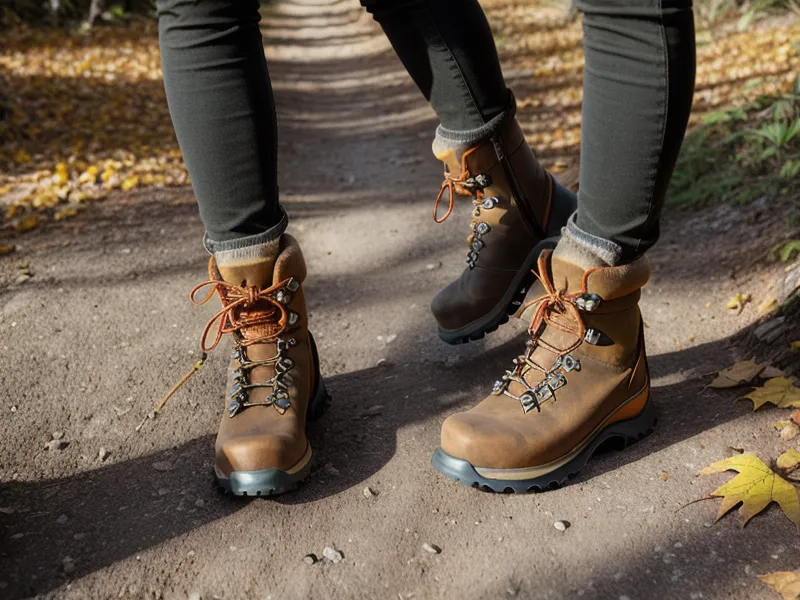
A warm-up isn't just the ten minutes at the car — it's also a gut check on the route itself. If hips are still locked up after the full sequence, that's the cue to pick a flatter loop instead of the one with real elevation gain. Sitting at a desk five days a week doesn't do a hiking body any favors, and a rough first mile often has as much to do with Monday-through-Friday posture as with anything happening on the trail.
The clearest proof of why any of this matters came on a downhill turn at Moose Hill, on what's technically just a Yosemite Decimal System Class 1 trail — nothing technical on paper. I pivoted off my downhill foot without thinking to brace for it, and the ankle just held instead of rolling. That's what a warmed-up nervous system buys on a descent: not strength exactly, but a joint reacting before I've consciously caught up to what's happening under my foot.
On days when the full warm-up sequence still doesn't loosen things up, I'll go with finding the flow by swapping steep summits for low-impact miles instead of forcing elevation my joints clearly aren't ready for that day. Trekking poles help on the way down, too, redistributing load away from the knees on a steep descent — I lent my spare pair to my neighbor Tom for one rough downhill stretch, and he'd figured out how to use trekking poles to reduce knee strain and bought his own pair within the week.
Where Warm-Up Ends and Everything Else Begins
A warm-up routine has one job, and it's not the same job as a supplement bottle. I went through a stretch of taking turmeric supplements, hoping they'd take some edge off cold-joint mornings, and never noticed a difference I could actually point to — so I stopped, and put that same attention into the ten minutes at the car instead.
Diet plays some role too — what I eat the night before a hike seems to matter almost as much as what happens in the parking lot the next morning, even if it's hard to isolate one from the other. Gear matters as well. A boot with a midsole that's gone flat undoes a lot of what a good warm-up buys, no matter how many leg swings came before it. A friend who works the shoe wall at REI is the one who first pointed that out to me — Beverly's also the one who texts me unprompted when a boot I've been eyeing turns up on clearance, which has saved me from a few bad gear decisions made purely on stiffness and desperation.
None of this is about chasing the hiker I was twenty years ago. It's about building a pre-trail routine that matches the joints I actually have now, not the ones I remember having, and adapting the approach instead of giving the whole thing up. The five moves take ten minutes. The trail is still there either way.