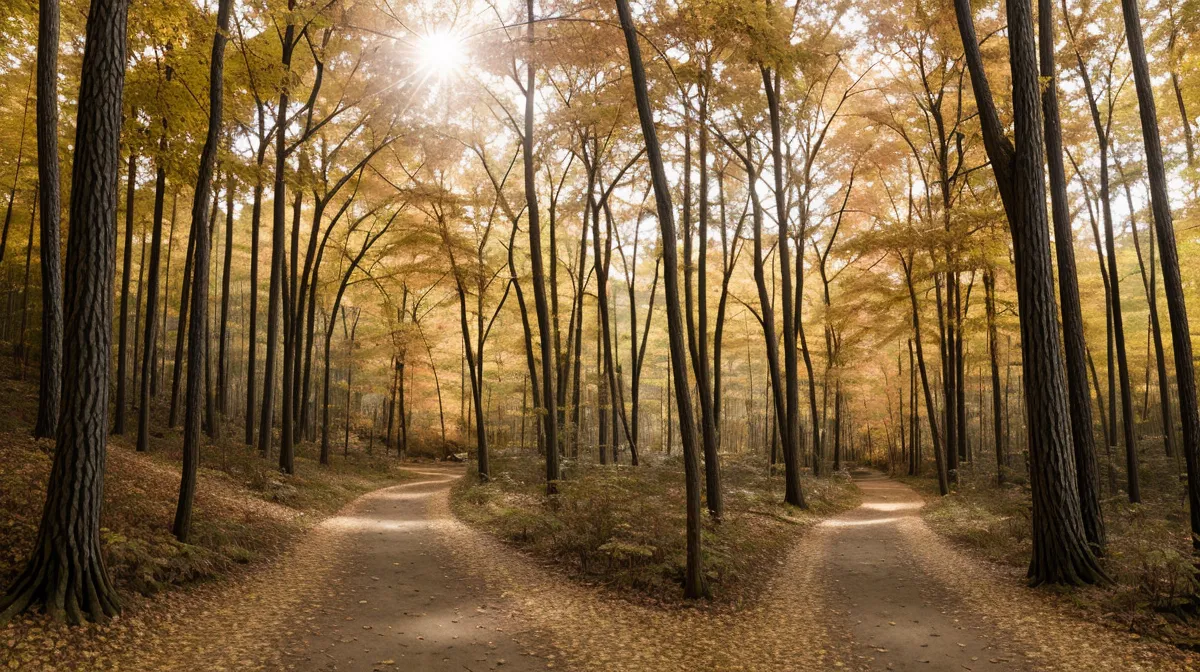
Standing at a trailhead in the Blue Hills one chilly morning late last October, I watched a group of twenty-somethings sprint toward the summit like gravity was just a suggestion. I stood there gingerly rubbing my right knee, feeling every one of my fifty-four years. I was clutching my trekking poles—those expensive pieces of aluminum that I used to think were for 'old people'—and wondering if I even belonged on the dirt anymore.
It’s a special kind of grief when your body starts to veto your favorite hobbies. For twenty years, I was the woman who spent every Saturday bagging peaks and every Monday bragging about it at the office. But lately? The trail didn’t just feel longer; it felt like the earth was actively fighting back. My hips were screaming, my knees were clicking, and I spent six months being absolutely, incandescently angry about it.
The Myth of 'Pushing Through' the Office Grind
Look, I spent those first six months of my 'joint journey' trying to ignore the reality. I’m an office manager in suburban Boston. I spend forty hours a week staring at spreadsheets and managing personalities that are often more taxing than a three-mile incline. By the time Friday rolls around, my hips are as tight as my budget reports. I used to think I could just 'reset' that stiffness with a brutal ten-mile hike on Saturday.
I was wrong. Dead wrong. That 'push through' mentality is what landed me on the couch with an ice pack for most of last winter. I realized that my sedentary job was setting me up for failure. When you sit all day, your hip flexors shorten, and your glutes basically go on vacation. Then, you ask them to climb a mountain? It’s a recipe for that dull, rhythmic throb in my left hip that usually starts exactly when the trail turns from soft dirt to loose gravel.
I had to stop seeing my body as a machine that needed more fuel and start seeing it as a system that needed a different kind of maintenance. I’m not a doctor—far from it. I have zero medical training. I’m just a woman who refuses to let a little synovial fluid drama turn her into someone who only walks from the car to the couch. You should definitely check with a professional if your pain is sharp or keeping you up at night, but for the rest of us 'creaky' hikers, it’s about the pivot.
The Math of the Move: Class 1 and Heel Drops
Early spring was when I finally started doing the research. I stopped looking at 'scenic vistas' on AllTrails and started looking at technical specs. I realized I needed to prioritize what the Yosemite Decimal System calls a Class 1 Hiking Trail. That means a well-defined trail with low risk of injury—no rock scrambling, no technical footwork. Just walking.
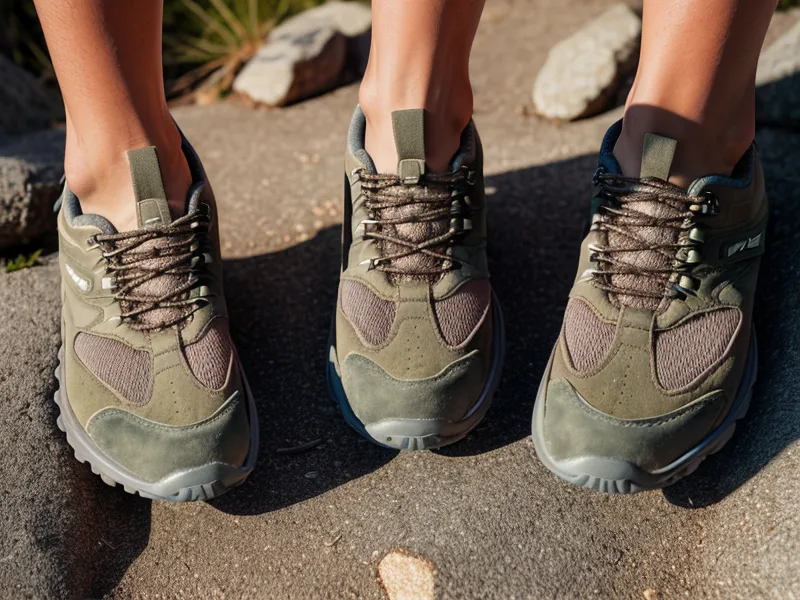
I also took a hard look at my gear. I used to wear these heavy, stiff leather boots that felt like they could survive a nuclear blast. But they were killing my gait. I learned about the Standard Heel-to-Toe Drop—the industry standard offset of 10mm found in most traditional cushioned shoes. For some, that drop is fine. For me? It was pushing my weight forward onto my knees in a way that made every descent a nightmare.
I switched to a shoe with a wider toe box and a lower drop. I wanted my foot to sit naturally. Why? Because the Average Knee Flexion for Level Walking is about 67 degrees. The moment you add a steep incline or a heavy, unbalanced boot, that number changes, and so does the pressure on your patella. By sticking to flatter trails and shoes that allowed my toes to actually spread out, I was finally giving my joints a fighting chance.
The Balance Trap: Why Strength Isn't Everything
Here is the thing that surprised me the most, and it’s something I don't think enough of us talk about. Everyone tells you to 'get stronger' to protect your joints. 'Do more squats!' they say. Well, I did the squats. I grew the muscles. But I was still wobbly on the trail. After about six weeks of mobility work this past May, I realized that raw power doesn't mean a thing if your stabilizers are asleep at the wheel.
Focusing on balance training instead of just raw strength training is the real secret. If your stabilizer muscles—those tiny ones around your ankles and hips—are weak, you’re going to have more micro-stumbles. And for someone over fifty, those micro-stumbles are what lead to major inflammation. I started standing on one leg while I brushed my teeth. I started doing lateral movements. It felt silly, but it worked better than any heavy leg press ever did.
It reminded me of Moving Past the 'Angry Six Months': What a Year of Prioritizing My Joints Actually Taught Me, where I finally admitted that I couldn't just muscle my way through aging. I had to outsmart it.
The Turning Point: A Humid Saturday in July
The real test came on one humid Saturday in July. I had picked out a two-mile loop—flat, shaded, and definitely not something I would have considered a 'real' hike three years ago. I felt that familiar twinge of ego. Was I really doing this? Was I the woman who does the 'nature walk' now?
But then I got out there. I heard the sharp, metallic click of my trekking poles against the granite rocks, vibrating up through my palms on a cold morning—wait, it wasn't even cold, it was just that crisp early-morning air that hits you before the humidity takes over. I realized something: the smell of the pines and the sound of the wind were exactly the same as they were at 4,000 feet. The woods don't care about your elevation gain.
I finished that walk without needing a handful of ibuprofen. I finished it feeling energized instead of depleted. I realized that 'shorter and flatter' isn't a defeat; it’s a strategy for staying active until I’m ninety. It’s about movement quality over quantity. If I can walk two miles every weekend for the next thirty years, I’ve won. If I do one ten-mile hike and blow out my meniscus, I’ve lost.
Strategy Over Ego
If you’re feeling that same frustration, I hear you. It sucks to slow down. It sucks to look at a map and realize the 'Red Trail' is no longer an option. But there is a whole world on the 'Green Trail' that we’ve been ignoring because we were too busy chasing summits. I’ve found that focusing on the fluidity of my movement—making sure my gait feels like a well-oiled machine rather than a rusting hinge—has made all the difference this year.
Don't be afraid to change your shoes. Don't be afraid to use the poles. And for heaven's sake, don't be afraid to pick the trail that everyone else calls 'easy.' Your knees will thank you, and you'll still be out there when everyone else is stuck on the couch watching the world go by through a window. We’re not quitting; we’re just recalibrating. And honestly? The view from the flat trail is pretty spectacular too.