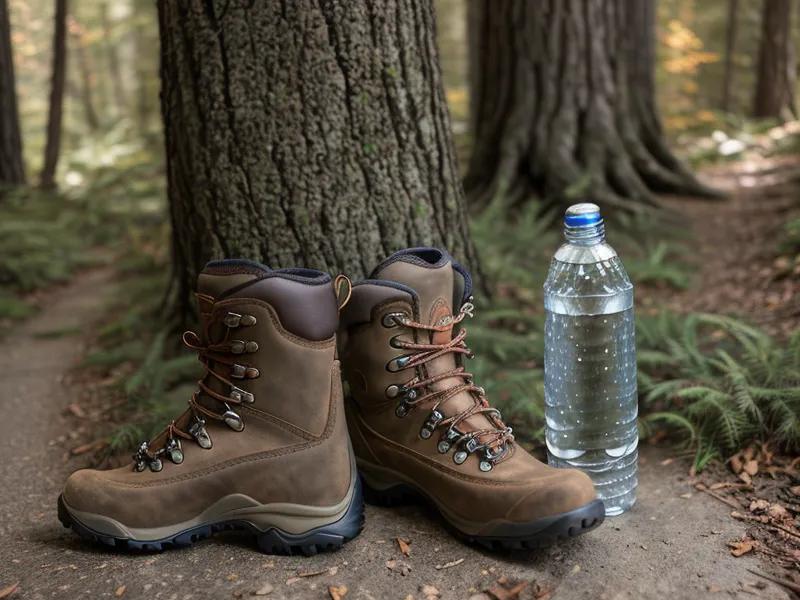
Four pairs of hiking shoes live in my front closet right now, and I only trust two of them on anything steeper than a gentle grade. That two-out-of-four ratio sums up pretty much everything that changed once my hips and knees started keeping score on every outing. Staying active after fifty isn't really about giving up miles; it's about trading one kind of risk for another, and the real joint-health math shows up in decisions most hikers never think twice about: how far you go, what's on your feet, whether you're carrying poles, and what you do in the ten minutes before you ever step on dirt. These are the hiking-tips nobody hands you until your own knees start filing complaints, and they're the difference between an active lifestyle that bends and one that just breaks.
Mobility after fifty isn't a single fix. It's a stack of small trade-offs, and most of them only make sense once you've tried the wrong version first. That's really what the rest of this is about.
How Long Is Too Long for an Active Lifestyle?
The old version of me measured a good hike in hours. Eight-hour slogs, back-to-back weekends, bragging rights at the trailhead. The current version measures it by how my hips feel on the drive home, not by the mile count, which took some getting used to. A loop through Borderland State Park that I'd have scoffed at a decade ago, something closer to three miles than ten, is now the one I actually finish without needing to pull over before I'm home. It's a lot like planning a trip for the hiker you actually are instead of the one you used to be. You don't pack for the hike you wish you were taking.
Sitting at a desk five days a week doesn't exactly prime your hips for a sudden weekend of mileage, and that mismatch between desk life and trail life is a whole separate problem worth its own conversation. What matters here is simpler: shorter hikes done more often beat one marathon outing followed by three days of regret. Going shorter doesn't mean going soft, though. Your muscles still need real load to stay strong enough to protect the joints around them, which is exactly where flat, easy walking quietly fails you. I leaned on flat pavement walks during my worst stretch, thinking I was being careful, and instead watched the muscle around my knees get noticeably weaker, a textbook case of muscle atrophy from not giving those muscles anything to push against. Shorter hikes on real terrain do a better job of keeping that tension without piling on the mileage.
Trekking Poles Are a Decision, Not a Last Resort
My neighbor Tom Maguire held out against poles longer than I did. Retired teacher, stubborn in the specific way retired teachers can be, and convinced poles were for people who'd already given up on hiking. I lent him my spare pair for one descent through Borderland State Park, and he came back within the week having bought a set of his own. Aluminum, not carbon, because in his words they "feel more honest under load." He's not wrong that the two materials behave differently in your hands, and plenty of hikers our age end up agreeing with him.
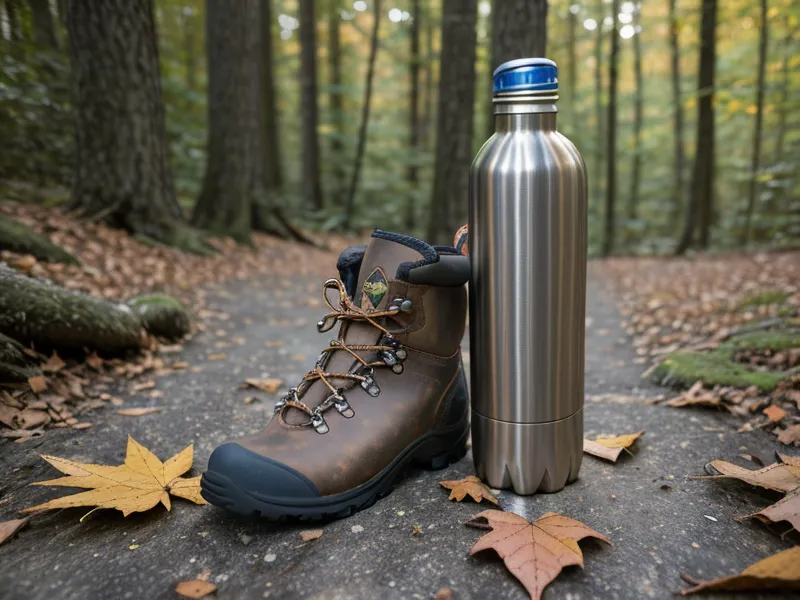
Poles take some of the braking work off your knees on the way down. Exactly how that load gets redistributed is its own topic, but your knees notice the difference. That's really the whole decision: if going downhill is where your joints complain loudest, that's your answer, and waiting until you're limping to pick up a pair is waiting too long. If you want the clinical term for the cartilage that's doing the complaining, it's the meniscus, and it changes with age. Poles just help you work around that instead of through it.
Shoes: The Trade-Off Nobody Warns You About
Here is the thing about hiking shoes after fifty: nobody tells you that more support and more room for your toes are often working against each other, and you have to pick which trade-off bothers you less. My friend Beverly works the shoe wall at REI part-time, and her rule is that she won't recommend an insole to a customer until she's walked miles in it herself first. That's more rigor than most of us put into our own gear decisions. She's the one who finally talked me out of my stiff leather boots and into something with a wider toe box, and the difference in how my hips felt by the end of a hike was immediate.
There's a real trade-off buried in that choice, too. A softer, more flexible shoe loses its cushioning faster than a heavy boot does, so you're trading long-term durability for short-term comfort, a swap worth understanding before you buy rather than after. And weight matters more than people expect: every extra ounce on your foot is extra work for your hip with each step, which is exactly why I stopped treating heavier-means-sturdier as a rule I didn't question. For what it's worth, I also spent a stretch trying turmeric supplements, hoping they'd take the edge off stiff mornings, and never noticed enough of a difference to keep buying them. Shoes changed things for me. The supplements didn't.
Warming Up Before You Even Reach the Trailhead
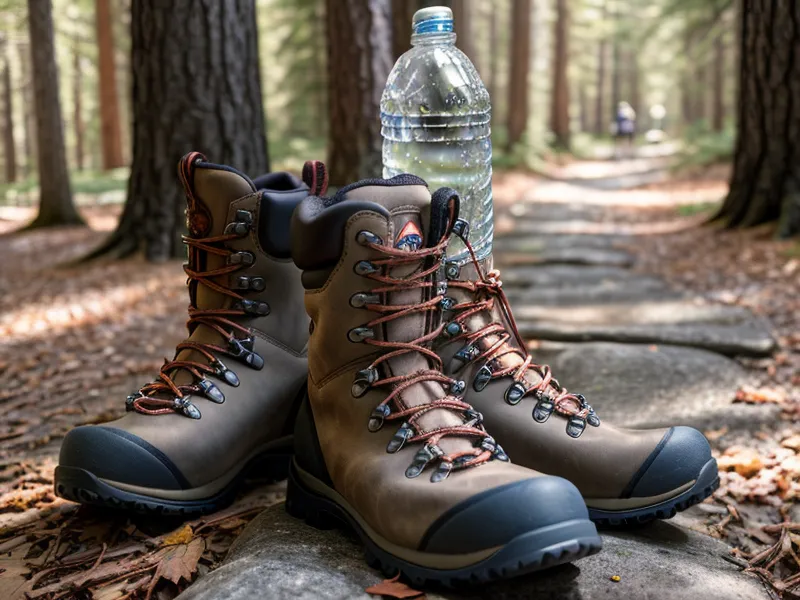
Ten minutes. That's what I spend now on leg swings and ankle circles before I lace up, instead of jumping straight out of the car and heading for the trail the way I used to. Joints that have been still all morning need a different kind of warm-up than joints that have been moving since sunrise. A warm car or a few minutes of sun isn't the same as actually mobilizing a stiff hip, and active movement before the climb does something passive heat can't.
None of this erases the parts I genuinely miss: the old pace, the longer loops, not having to think about any of it. I've written before about moving past the 'angry six months', and the honest version is that the frustration never fully disappears, it just gets quieter. What changes is the Monday test: the first few steps out of bed used to tell me exactly how bad the week ahead would be, and most weeks now, they don't tell me anything at all, which might be the clearest proof the trade-offs were the right ones. I've also written about why my morning trail walk started feeling like a rusting hinge, and the short version of all of it is this: if a hike is starting to cost you the next three days of recovery, the fix usually isn't quitting, it's figuring out which trade-off you've been avoiding.