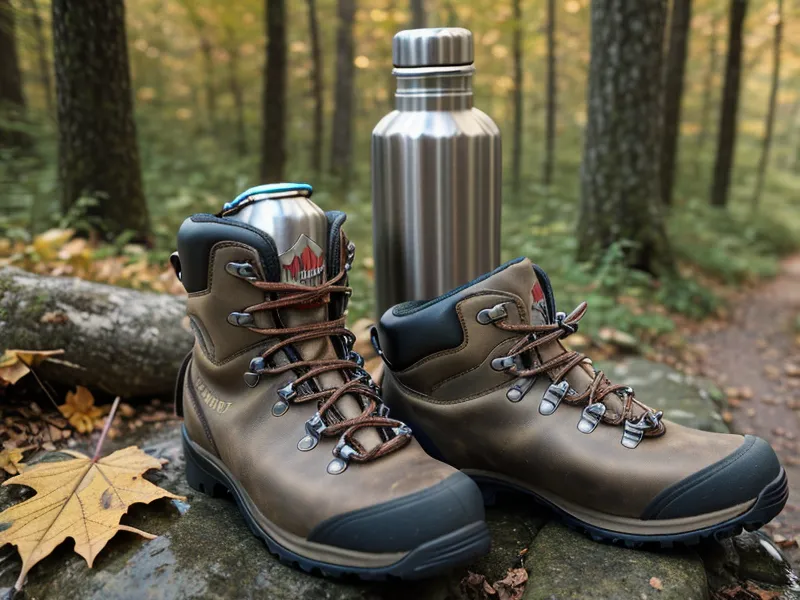
A stiff twelve-millimeter heel and a dead-flat sole solve two completely different problems. For twenty years of hiking, I never once asked my boots which one my knees actually needed. That gap is basically the whole hiking gear question nobody flags until a hip starts arguing back halfway up a hill. I'm not a physical therapist, just a fifty-four-year-old office manager who spends her week in spreadsheets and saves her real self for the weekend trail, but the joint health and mobility after 50 questions I get asked most — from my regular hiking partner to a couple of women in my Wednesday walking group — all circle back to the same handful of gear decisions. So here they are, answered straight, no runaround.
Do Heavier Boots Actually Protect Aging Knees?
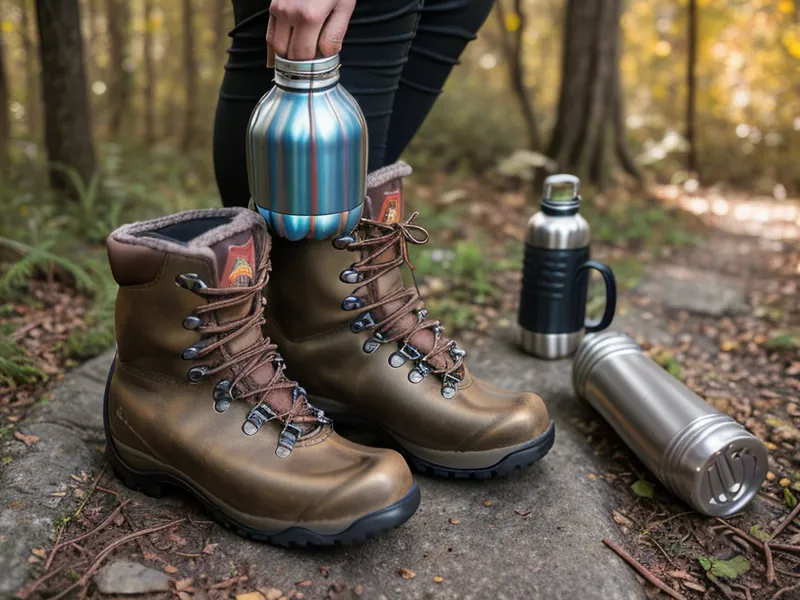
Not the way I assumed for twenty years. My old leather boots were sturdy and waterproof, built around that traditional twelve-millimeter heel-to-toe drop meant to protect feet from jagged rock — a fine spec at twenty-five. At fifty-four, that raised heel behaves more like a permanent low wedge, and it was quietly loading my knee and hip differently with every step I took.
Before I touched the boots at all, I tried custom orthotics: the molded kind from a specialty fitting, not a drugstore insert. They didn't fix anything. They just relocated the ache from my hip down into the arch of my foot, which felt like a lateral move dressed up as progress.
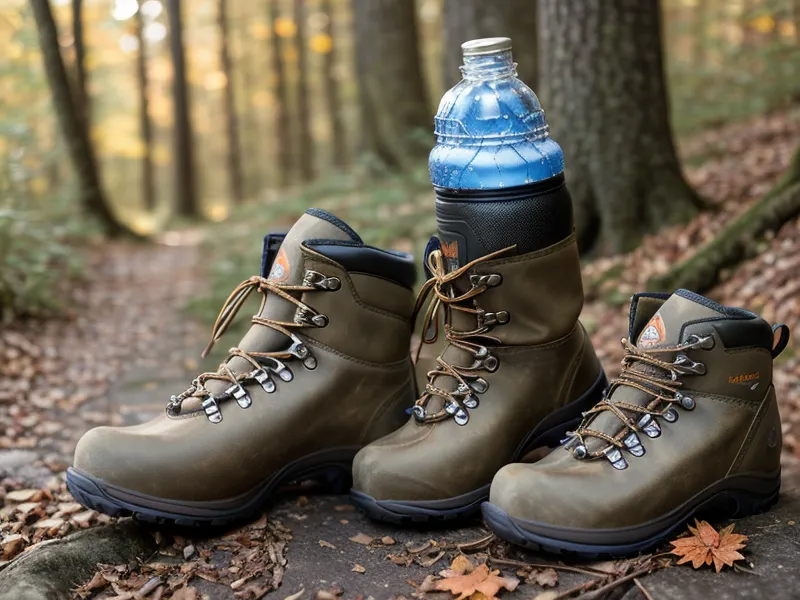
Eventually I switched to high-stack trail runners with a much lower drop, closer to zero, built around the same idea as barefoot mechanics — let the foot land the way it wants to instead of forcing it through a wedge-shaped hinge. I didn't go full minimalist; my joints want more cushion than a thin strip of rubber between them and granite. But the weight difference alone felt like dropping a small dumbbell off each ankle.
Why Hiking Gear Matters More for Joint Health After 50
Here is the thing nobody mentions when you're thirty: gear stops being about style and starts being mechanical triage. Support is genuinely useful, but too much stiffness in a boot keeps the foot from doing its own job, and that job, absorbing and redirecting impact, gets pushed straight up into the knee and hip once the shoe refuses to bend.
Stubbornness delayed me longer than I'd like to admit. Changing my gear felt like admitting something about getting older that I wasn't ready to say out loud, so I kept hiking in boots that no longer suited me, coming home with a hip that argued with me well into the next evening. I still miss how effortless those early years on the trail felt, back when gear was the last thing on my mind.
Are Trekking Poles Just for Steep Mountain Trails?
No — and that assumption cost me more than the orthotics did. I used to roll my eyes at poles on anything short of a real climb. I thought they were for the Alps, not for an ordinary loop through Middlesex Fells.
Maureen, my regular Saturday hiking partner, finally asked me flat out why I'd waited so long to bother with a pair — she logs every outing's pace in a paper notebook so water-stained by now it's basically fossilized, and she doesn't miss much. Fair question, honestly. Going downhill puts a different, more punishing kind of strain on the knee than climbing does. Physical therapists call it eccentric load. Using poles to catch some of that weight before it lands on the joint is the whole reason my knees stopped filing complaints by the time I reached the car.
Rethinking What 'Low Impact' Really Means
Sticking to flat, low-impact walking doesn't protect your joints better over time. Bodies still need some varied, weight-bearing challenge to hold onto balance and bone strength, and that's a bigger subject than one hiking-gear post can settle honestly.
Kathleen, from my Wednesday walking group, keeps a range-of-motion log detailed enough to make a clinician jealous, and she asked me almost this exact question after swapping her usual loop for a flat rail-trail near her house. I told her the flat trail wasn't wrong, just incomplete. Uneven ground builds the small stabilizer muscles that pavement never touches, and that balance work matters as much for staying upright as any amount of cardio does.
Getting to that point took longer than swapping the boots ever did — I had my own stretch of moving past the 'angry six months' phase before I was willing to admit any of it needed changing.
These days I spend a few minutes on some dynamic warm up exercises in the parking lot before I take a single step on the trail — leg swings, mostly, while my husband pretends not to know the woman doing them next to our car. It feels a little ridiculous. It changes how the first mile feels, every single time.
What Changes on the Drive Home Once the Gear Is Right?
Stepping out of the car after a hike used to come with its own ritual: bracing a hand on the door frame, swinging one leg out, waiting for the joint to agree to hold weight before trusting the other one. Now I just open the door and stand, the same way I would after a grocery run, and that absence still catches me off guard a little.
It isn't dramatic. There's no fanfare, no single moment where a switch flips and the hip is fixed for good. It's just quiet — the good kind of tired in the legs afterward, instead of that grinding, bone-on-bone feeling that used to follow me all the way back to suburban Boston.
Mobility After 50 Comes Down to a Few Honest Trade-Offs
None of this means doing everything the exact same way forever. It means deciding which changes are worth making before the trail makes that decision for you — and for me, gear turned out to be the cheapest, least dramatic fix on the table, cheaper than another year of gritting my teeth through pain a lower heel and two poles could mostly solve.
If you're standing at a trailhead right now, hesitating the way I used to, check your gear before you decide the trail itself is the problem. A lower-drop shoe and a pair of poles won't undo fifty-plus years on anyone's knees, but for me, they were the difference between quitting the woods altogether and just changing how I move through them.