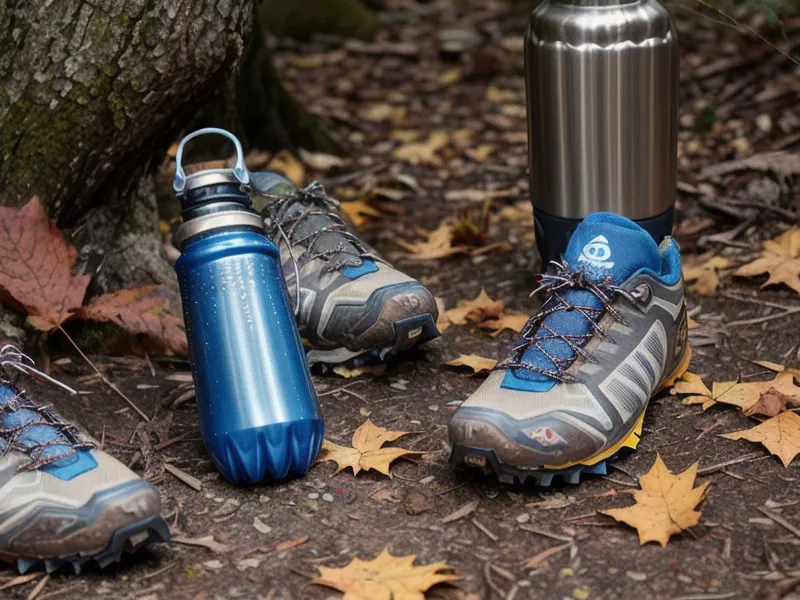
Each of my old leather boots weighs 32 ounces on the kitchen scale. That's two pounds a foot, lifted on every single step. Nobody brings up that number when the talk turns to joint health, mobility over 50, or the right hiking gear for active aging. They talk about support instead: stiff soles, thick leather, a boot that could survive a war.
Here is the myth I carried: the heavier and stiffer the boot, the safer your knees and hips. It didn't hold up for me. What worked was weighing what I was lifting and picking the lightest shoe that still grips the ground I actually walk on. I'm an office manager, not a doctor, so read this as one woman's field notes.
Myth one: heavy hiking gear protects joint health
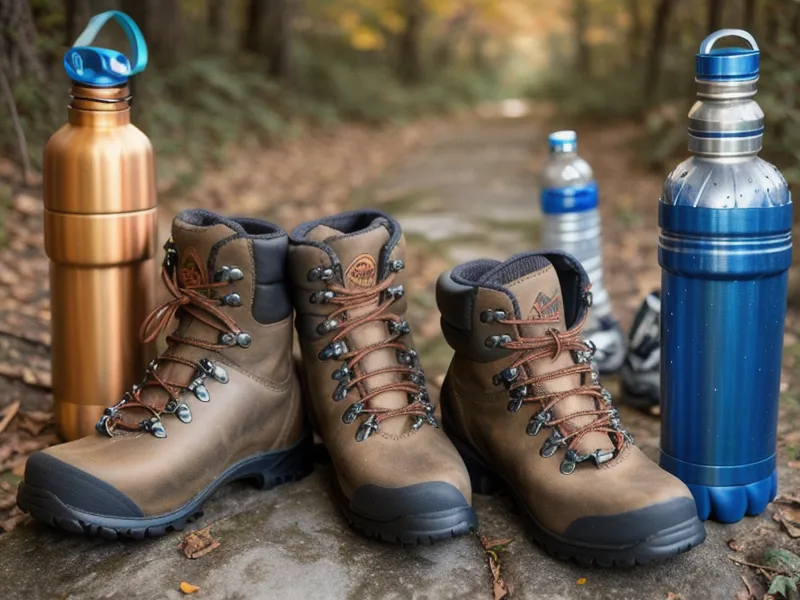
Boots like mine come with pride attached. Mine looked ready for a Himalayan expedition, even though they mostly conquered weekend hills. I believed that without stiff full-grain leather around each ankle, I was one bad step from disaster. That was loyalty by habit, not by evidence. At twenty-five you don't feel the weight. Now every ounce feels like a personal insult from gravity.
Those boots and I logged plenty of Saturdays around the big reservation south of the city. I'd finish each hike with legs that felt poured full of concrete. Maybe the stiffness was protecting my ankles. My hips, though, had to swing all that leather up every granite step, and they let me know about it.
I tried to fix the stiffness from every angle except the one on my feet. The glucosamine tablets I swallowed every morning did nothing I could feel. The boots were the one thing I never questioned.
Evenings looked the same for a long stretch: dinner, then a heating pad draped across both knees while I scrolled trail-shoe reviews and doubted every one of them.
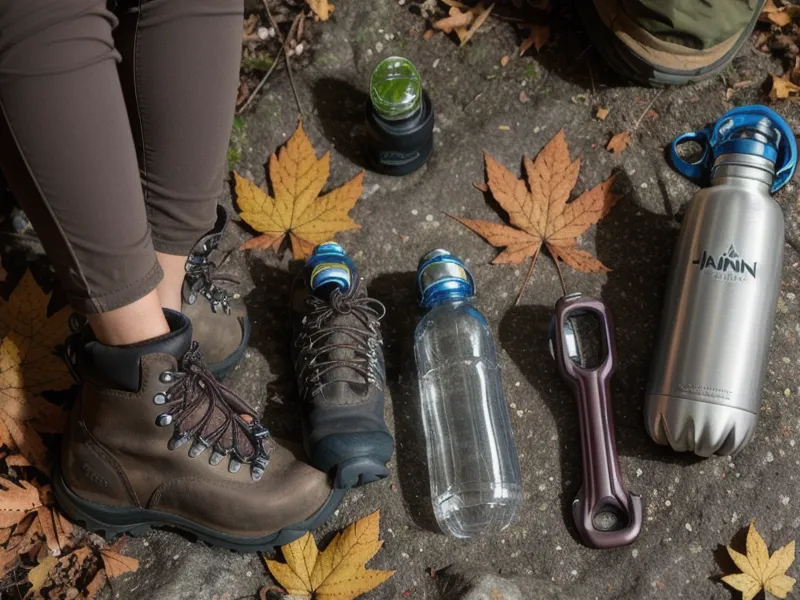
How much weight are you actually lifting?
A friend of mine who plays golf every week, walking the course without a cart, had just moved into lighter shoes and could not stop talking about it. She passed along an old backpacker's rule of thumb: one ounce on your foot feels like five on your back. I can't source that rule, so treat it as a gut check, not a law. Still, the math caught my attention. My boots were 32 ounces each. A typical trail runner is about 10. That's 22 ounces less per foot, 44 in all. Multiply by five and, on paper, I'd taken close to fourteen pounds out of a backpack.
Look, I felt ridiculous. Mesh shoes for hiking? They felt like slippers. I worried about a rolled ankle, and that worry is fair. If you've had ankle trouble, ask your doctor before you switch. I tested mine on a loop I knew by heart instead of trusting them on unfamiliar, rocky ground.
Before that first test, I worked through the best dynamic warm up exercises for older hikers before the trail. Past 50, you don't hop out of the car and start climbing. You negotiate with your hamstrings first. I'm not a health professional; this is only what worked for me, so check with your own doctor before changing your routine, especially if your knees are as cranky as mine.
Testing trail runners at World's End
The first real test was the rolling loop at World's End. I kept waiting for the missing ankle support to betray me. It never did. What I noticed instead was the ground itself. My feet could feel it and react to it, not painfully, just honestly. Behind thick leather, they had gone lazy. In mesh, they woke up, and the breeze came straight through the shoe.
At the top of the rise, the Boston skyline sat across the water. A view like that used to cost me. I'd reach a summit like Great Blue Hill already dreading the way down, with my hips complaining. This time the dull throb in my left hip, the one that usually showed up by the second mile, stayed quiet.
One morning at the kitchen counter, coffee in hand, I stood completely still, no shifting from foot to foot, no hip against the cabinet, and only then noticed how long I'd been doing that little dance.
Shoes aren't a miracle cure. I still have stiff days, and I still hike carefully. Lighter footwear only trims one part of the load. The rest of the work is still mine to do.
Myth two: low-impact is all you need
Here is where I get opinionated. Everyone told me to stick with low-impact stuff like walking, swimming, some gentle stretching. For me, the gentle-only routine didn't work. It made me a slightly more comfortable person who still couldn't climb a hill.
So I added real strength work, heavier than those little pink two-pounders, to get my glutes and quads pulling their share. Not powerlifting. Just enough load that my legs noticed. It's a paradox: I had to get stronger to stay light on my feet. Clear any new strength routine with your own doctor first, because what suits my knees may not suit yours.
Weigh your boots, then decide
Put your boots on the kitchen scale. Then set the shoe you'd rather wear beside them and compare. If the gap is big and your knees are what ends your hikes, that gap deserves attention.
My rule now is simple. On familiar routes with a light load, I wear the trail runners. On rough, unfamiliar ground, or with a heavy pack, I think harder about a sturdier boot, and if I had any doubt about my ankles, I'd ask a professional first.
Letting go of the hardcore leather wasn't a defeat. It was a strategy. It meant accepting the body I have now so I could improve on it, and getting past my angry phase was part of that. I still miss the clomp-clomp of my old boots sometimes; there was a ruggedness to it, but I don't miss the pain.
We might be slowing down, but that doesn't mean we have to stop. We just have to get smarter about the weight we carry. I have zero medical training, so this is one woman's experience, but if the trails feel twice as long as they used to, weigh your boots first.