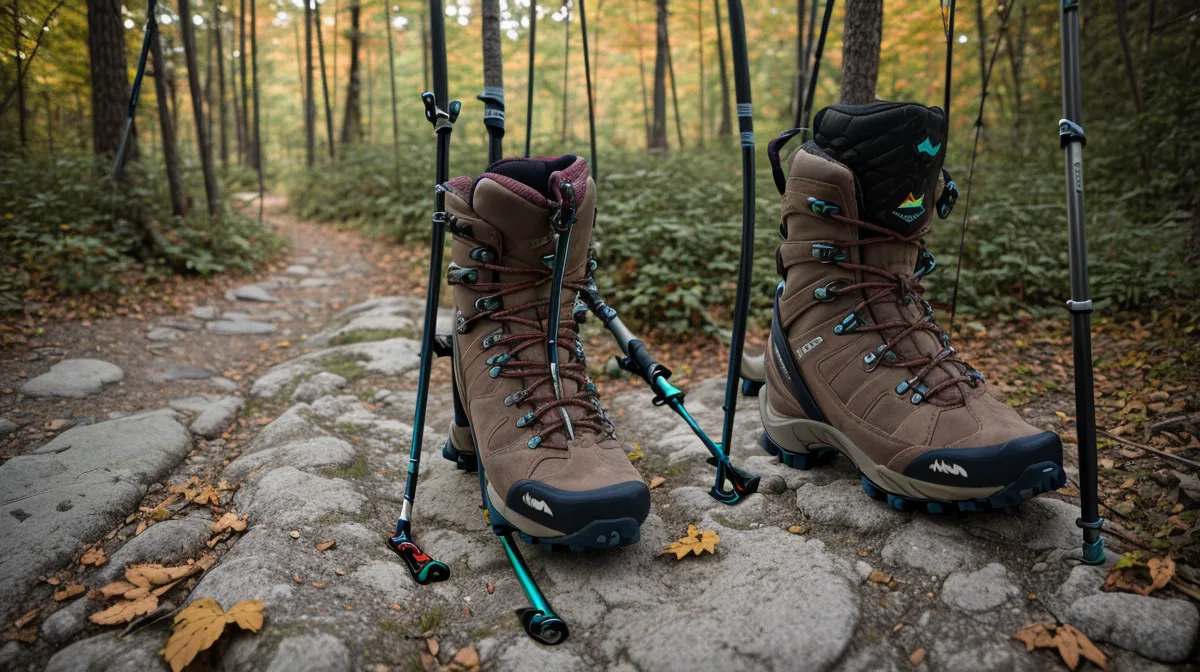
Twelve millimeters. That's the heel-to-toe drop built into the leather boots I hiked in for almost a decade, and somewhere on the trails around Noanet Woodlands, that single measurement turned into the reason my hips and knees started keeping score. Low-impact hiking after fifty wasn't a phrase I'd ever used before that morning. I was just standing at the trailhead, watching a couple in their twenties jog past before I'd even finished my first hundred yards, same loop, same morning, only one of us wincing, and wondering when exactly joint mobility had become the whole ballgame instead of mileage.
Twenty years of weekend hikes never made me think twice about drop, or cushioning, or any of it — I just laced up and went. Then a loop that used to take under two hours started eating closer to three, and I spent a long stretch being furious about it before curiosity finally won out over the anger. Staying active after fifty, it turns out, sometimes means becoming the exact gear nerd you swore you'd never be.
Low-Impact Hiking After Fifty: The Noanet Woodlands Reality Check
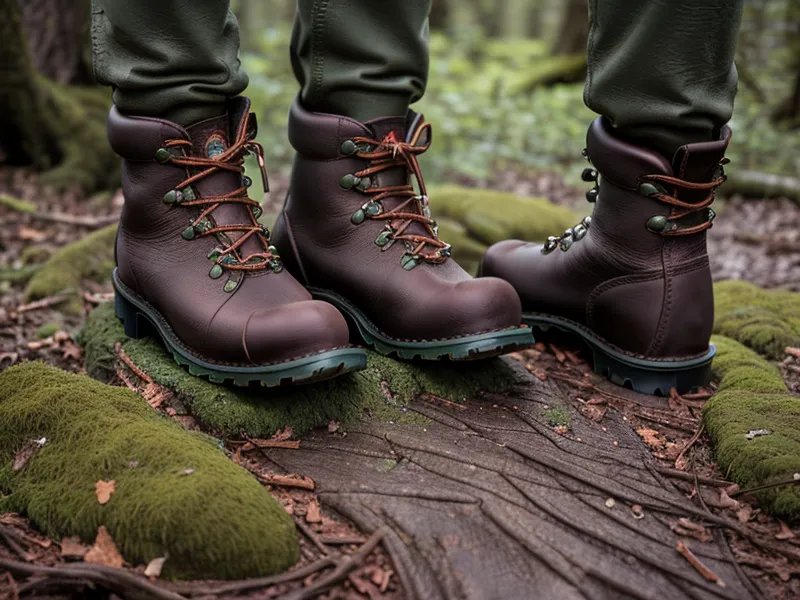
The morning I finally admitted something had to change, I was standing near the Noanet Woodlands trailhead, boots already laced, more focused on my own hesitation than on the trees in front of me. My right hip had a dull ache before I'd even hit the first rise, and I was doing that internal roll call of which joint was filing a complaint today. On paper the boots weren't villains — heavy leather, built to lock the ankle down tight, which I'd always assumed counted as protection. What that lockdown actually did was hand the shock-absorbing job to my knees and hips instead, since my feet weren't allowed to do their share anymore. Osteoarthritis was already part of the conversation with my knees by then, and a twelve-millimeter incline pitching my weight forward with every step wasn't doing me any favors.
Most of my week back then was spent behind a desk, hips folded at the same angle for eight hours straight, and then I'd expect those same hips to climb granite on a Saturday without so much as a warning shot. That gap between a desk chair and a switchback is bigger than I ever gave it credit for. Sitting on a granite bench near the trailhead, staring at my own boots, I ran through everything I'd tried so far and realized most of it treated the ache after the fact instead of the mechanics causing it.
My Ice Pack Habit Never Solved Anything
For a stretch of weeks that fall, my routine after every hike was the same — home, couch, a bag of ice on whichever joint had complained loudest that day. It never once fixed anything. It bought me maybe an hour of numbness before the ache came back at exactly the same size, which should have told me sooner that I was managing a symptom instead of the actual problem. There's a difference, too, between a joint that's genuinely thinning out and one that's just running short on lubrication, and I still couldn't tell you which camp my knees fall into — that's a deeper question than an ice pack was ever going to answer.
The clicking and grinding scared me more than the ache did — every pop sounded like something breaking. I've since read enough to know that noise in a joint isn't automatically proof of damage, though I couldn't tell you which sounds matter and which don't, and neither could an ice pack. What actually shifted my thinking wasn't the ice at all. It was accepting that mobility isn't about doing less, it's about changing the leverage.
Shedding the 12mm Anchor
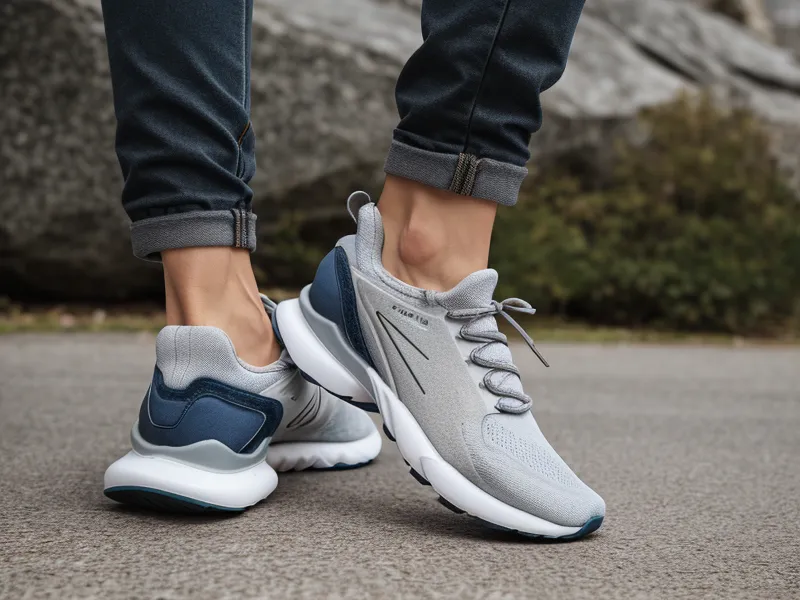
By the time the snow finally gave up on New England, I was ready to run an experiment. I traded those heavy leather anchors for a pair of wide-toe-box shoes with a zero-millimeter drop — heel and forefoot sitting at the exact same height off the ground, the way walking probably worked before we spent fifty years on pavement and orthopedic promises. The first time I stood on a trail in them, my toes actually spread out inside the shoe, which I hadn't felt happen in years. Balance came back with it. My old boots had been squeezing my toes together the whole time without my noticing, quietly stealing stability I didn't know I'd lost.
Shoes wear out from the inside before they ever look done on the outside — the cushioning breaks down long before the tread does, and I didn't pay attention to that until I started actually paying attention. I've written before about trading my heavy leather boots for trail runners, and it's still one of the better decisions I've made for my hips. Losing that weight meant I wasn't lifting several pounds of leather with every stride, and over a few miles that adds up to a lot of force I simply deleted from the equation. It didn't fix everything — my knees still have their moods — but it took the sharpest edge off.
Trekking Poles Really Do Change the Math
For years I was too proud for poles. I thought they were for people much older than me, and then I looked in the mirror and realized I was exactly the person I'd been picturing. Learning to use trekking poles properly — elbow at roughly ninety degrees on flat ground — took longer than I expected, but the payoff showed up almost immediately on the way down hills instead of up them. Descending loads the front of the knee in a completely different way than climbing does, and poles are the first thing that's ever given my knees a break during that part of the walk.
Learning how to use trekking poles to reduce knee strain meant more than just leaning on them — it's about using them to propel forward and take the shock out of each step down, shifting a real chunk of the pounding away from my knees and into my shoulders and core instead. Jim from two doors down still grumbles the entire way up the first rise whenever we walk the Noanet loops together, every single time, and he has never once actually skipped a Saturday. That's the whole deal with poles too, in a way — the complaining doesn't mean you're not showing up.
Stretching Wasn't the Fix My Joints Needed
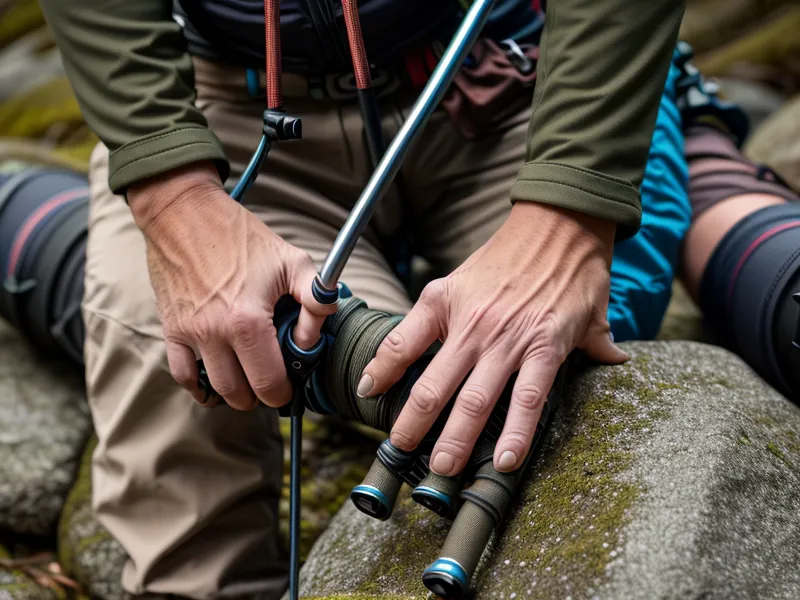
Here's the thing nobody told me during those first angry months — focusing only on joint-specific stretches often made the stiffness worse, not better. I spent weeks doing nothing but hip circles and seated leg lifts, convinced that if I just loosened the joint enough, the pain would quit. Instead, some days it felt looser and less stable at the same time, which just meant more clicking the next morning. Mobility and flexibility turned out to be two different things entirely — one is about control, the other is just range — and I'd been chasing the wrong one.
What actually helped was total-body loaded movement — carrying a light pack even on short walks, so the connective tissue around the joint had a reason to adapt instead of just being stretched further. Synovial fluid gets a mention in almost everything I've read on this since, though I'll leave the deep explanation to people more qualified than me. I added one specific tool to my evening routine around the same time, mostly for a nerve that runs down the front of the thigh rather than the muscle itself — that's really a story for another day.
A reader named Elaine, who's written to me a few times from out in western Massachusetts, pushed back hard when I first mentioned the light-pack idea. Her trails are flat river paths, not hills, and the extra weight felt pointless to her without any grade to push against. She wasn't wrong about that — loading a joint matters more when there's an incline involved, less when the ground stays level the whole way.
None of this replaced actual movement, including the supplements I tried early on — they were never going to substitute for what loaded movement does, no matter how consistent I was about taking them. What I eat plays into the swelling too, though that's its own long conversation I'm still sorting out one dinner at a time. The whole shift took me from thinking of myself as a patient with a broken part to something closer to an athlete managing her own recovery, which sounds dramatic for someone who just wanted to finish a three-mile loop without wincing, but it changed how I approached every single walk after that.
Looking Up From the Trail Again
Ten weeks or so into all of this, tying my boot laces one morning, I bent down and straightened back up in a single motion — no pause, no hand braced on the doorframe, nothing. I didn't think much of it until I was halfway through breakfast and realized I hadn't been able to do that without a wince in longer than I could remember. Mornings are still stiffer than afternoons for me, and I've stopped fighting that particular fact instead of pretending otherwise. A hot shower before a hike does something different than actually warming up by moving does, and winter trails add their own layer of negotiation on top of all of it.
By early summer I was back at the same rocky overlook where I'd struggled the autumn before, and the mountain laurel was just starting to open. I realized I was actually looking at the view instead of staring at my own feet, checking every root for the next sharp jab of pain. For months my hikes had been a series of downward glances. That day, I was looking at the horizon again.
Aging, as far as I can tell, is a long series of trades. You give up the heavy boots and gain a pair of poles. You give up the ten-mile scrambles and gain a real appreciation for a shorter ridge walk you actually enjoy start to finish. Moving past the 'angry six months' taught me the one thing I'd pass on to anyone else standing at a trailhead feeling betrayed by their own hips: change the leverage before you decide the trail is closed to you. New shoes, a different rhythm, and a little less pride about the poles gets you further than gritting your teeth ever did.