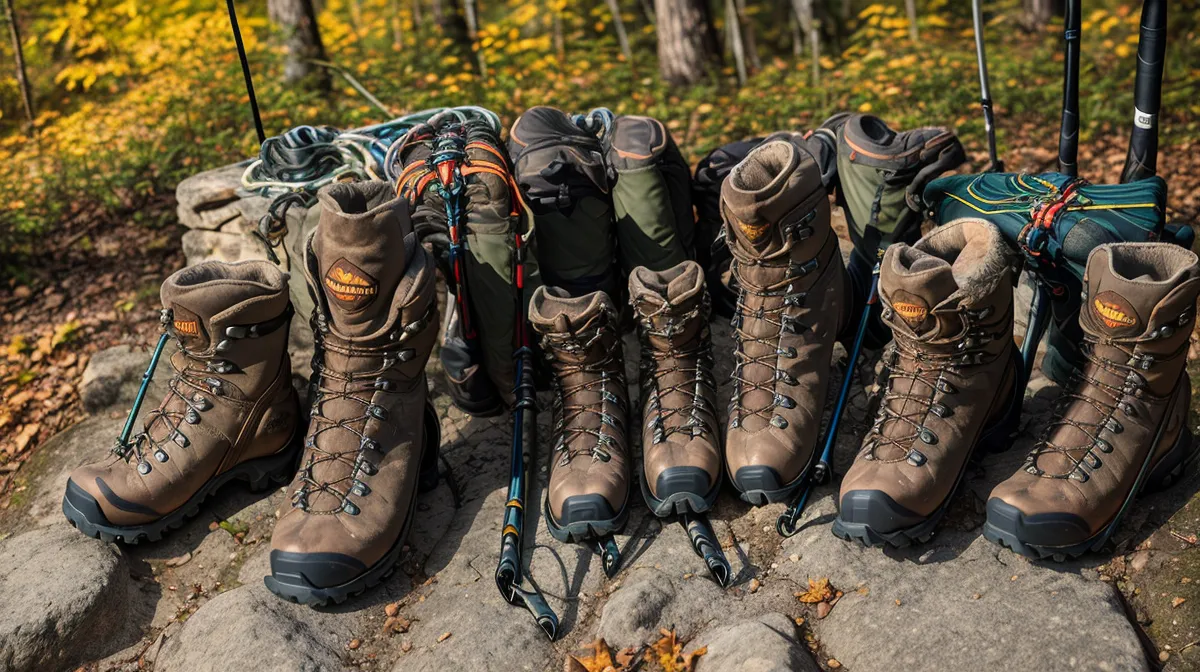
What actually separates a hiking habit that quietly wrecks your hips from one that only feels hard? I've spent enough time at a Noanet Woodlands trailhead turning that question over to know the answer isn't as obvious as it sounds. Active aging means the hiking tips that worked in my twenties stopped working somewhere around menopause, and nobody warned me that protecting joint mobility would mean quitting habits I'd trusted for years.
Heads up: this piece has a few affiliate links in it. If you buy through one, I earn a small commission at no extra cost to you, and I only mention things that actually earned a spot in my own gear closet or supplement shelf. Here are five habits I finally quit, weighed side by side against what replaced them.
Why Powering Through Stiffness Doesn't Help
Powering through used to be my whole approach to a stiff Saturday. Dull ache in the knee, tight hip, I'd tell myself the first mile would loosen everything up and push off anyway. Some mornings that gamble paid off. Most mornings it didn't, and I spent the rest of the weekend paying interest on it.
Here's the thing: joints don't read the clock the same way you do. Mine feel different first thing in the morning than they do by mid-afternoon, and ignoring that is how I ended up limping the last half mile more times than I'd like to admit. Part of what's moving through a stiff joint is the synovial fluid — the natural lubricant that keeps things gliding — and pushing hard before that fluid warms up is asking for trouble.
Mobility and flexibility get used like they're the same word, and they aren't. One is about controlled range of motion, the other is about how far a muscle will stretch, and mixing the two up is how people do the wrong warm-up entirely. One stretch I always come back to activates the nerve line running down the front of the hip — I couldn't explain the full mechanism if you asked, only that skipping it makes the first mile noticeably worse.
Diet plays its own quiet role here too. What I eat the day before a hike changes how puffy my knees feel at the trailhead, though I try not to turn every meal into a research project. Most mornings before I leave the house, I loop a resistance band around the door handle in my office — the corner desk in the back bedroom doubles as my planning spot — and give it a few slow pulls before I ever touch a boot lace. The band gives a little, then snaps back against my palm, which sounds like nothing until you realize it's the difference between a warmed-up hip and a cold one.
Grit has its place, a single rough final mile, maybe. It's a bad plan for a body that wants many more hiking seasons, not just this one.
Custom Orthotics Didn't Fix My Hip — Better Boots Did
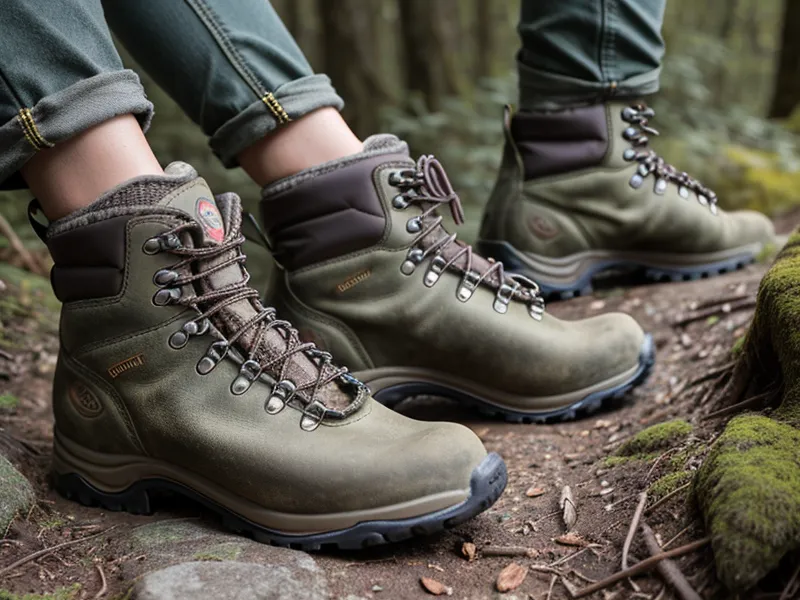
Custom orthotics seemed like the obvious fix when my hip started complaining. I had a pair molded, slipped them into my regular boots, and waited for the relief that was supposed to show up. It never really did — if anything, the rigid arch support changed the way my foot rolled with every step, and my hip noticed the difference within days of wearing them on the trail.
That failure taught me something the orthotics never could: the problem usually starts lower than people think, and it's rarely fixed by adding one more rigid piece to the equation. A lot of what I know now about picking boots instead of forcing an insert to compensate came out of that mistake — it's part of what I mean when I talk about moving past the grind instead of stacking more gear on top of an old problem.
Boots wear out in ways that aren't obvious from the outside, too — the cushioned midsole underneath breaks down long before the exterior looks tired, so a boot that felt supportive last season can be quietly failing you this one. And plenty of hip stiffness has nothing to do with the trail at all — sitting at a desk five days a week and then expecting your hips to open up fully on day one of a hike is its own setup for trouble.
These days getting ready looks different. I can bend down to lace my boots and come back up in one motion, no hand braced on my knee, no pause halfway through — something the orthotics never once gave me.
If you're chasing stability, start with the boot itself before you pay for a rigid insert to fix what the boot is already doing wrong.
Rest Days Versus Gentle, Consistent Motion
Common wisdom says sore joints want rest, and for exactly one day that's probably true. Beyond that, full rest starts working against you. Sitting still all day left my knees feeling tighter by evening than a short walk ever did, which surprised me the first time I noticed it.
The fluid that keeps a joint gliding doesn't rebuild itself just because you sat on the couch for six hours. Hyaluronan responds better to consistent, gentle use than it does to total shutdown, at least from what I've noticed in my own knees.
Gentle motion turned out to matter more than total stillness. Some of what keeps a joint moving well is genuinely mechanical — load without pounding, the kind of resistance-band work or slow bodyweight movement that builds real strength around a joint without turning into a heavy gym session. I've leaned on a program called Ageless Knees for exactly that kind of low-impact strengthening on weeks when a full hike isn't realistic.
Save actual full rest for a real flare-up. On an ordinary stiff day, gentle motion usually wins the comparison.

Weighing Random Vitamins Against a Targeted Supplement
For a long stretch I took whatever joint vitamin was on sale that month, switching brands every few weeks without any real logic behind it. None of it was targeted at anything specific — it was just a general hope that something in the bottle was helping.
Eventually I started using Joint Genesis, mostly because the pitch was narrower than the usual multivitamin approach. It's one capsule with morning coffee, no shellfish, no gluten, no dairy, which matters because my stomach can be as particular as my knees. It comes with a guarantee long enough to test it across a full hiking season, which is the kind of thing that actually lets you judge whether something is doing anything at all.
Cartilage thinning and losing lubrication get talked about like they're the same issue, and they aren't quite — which is part of why a supplement built around one doesn't automatically fix the other. Kathleen, a fellow hiker from my Wednesday-night walking group, asked me the exact right question the first time I mentioned it — whether it matters if she takes it before or after her coffee. I don't have a precise answer for her — I just take mine with breakfast and haven't noticed much difference either way.
Check out Joint Genesis here if the one-capsule approach sounds simpler than what you're currently doing. I've also tried JointVive, which leans on glucosamine-and-chondroitin capsules — the classic pairing — plus a couple of other ingredients aimed at active days. If glucosamine has worked for you before, JointVive is the safer, more familiar bet. If you'd rather keep your morning routine to one capsule and don't have a shellfish allergy, Joint Genesis is the simpler choice. Either way, talk to your own doctor before adding anything new, especially if you're already managing another condition.
Active Aging Means Changing the Map, Not Quitting the Trail
I used to measure every hike against the ones I did years back, like anything under a punishing elevation gain didn't really count. That comparison game cost me more joy than my joints ever did. It took a while to sit with something closer to grief — not for an injury, but for a version of myself I'd quietly assumed would stick around forever — and reading about that invisible grief from other people going through the same thing helped more than I expected.
Maureen, my longtime Saturday-morning hiking partner, still lobbies for the longer loop at Noanet Woodlands most weeks, even when her own hip is clearly not on board. Watching her do that taught me something useful: the urge to chase the harder route doesn't disappear just because the joints can't always back it up anymore, and that's a normal thing to sit with, not a character flaw.
On the descent sections of that same loop, control comes more from the legs bracing against gravity than from the knee joint just absorbing each step — trekking poles help here too, shifting a real share of that load into your arms and shoulders instead of leaving your knees to handle it alone. None of that replaces good judgment about which loop to pick in the first place, and that's really the whole balancing act — how much a movement and support balance can carry you versus how much the trail itself is asking of your joints that day.
Chase the vertical on the days your body is clearly up for it. Change the map on the days it isn't. Both choices keep you a hiker — only one of them keeps you a hiker who can show up again next Saturday.
None of these five swaps happened overnight, and none of them required quitting hiking to make peace with a changing body. Custom orthotics, powering through, total rest days, random vitamins, chasing elevation for its own sake — five habits, five quiet trade-offs, and every one of them was replaceable with something that actually worked with my joints instead of against them.
Ready to see whether a more targeted approach fits your own routine? Take a look at Joint Genesis and decide for yourself — I'll be the one at the Noanet Woodlands trailhead picking the moderate loop, still smiling about it.