A summit day costs me three sore mornings afterward. A flat loop through Noanet Woodlands costs me nothing but tired feet by dinnertime — same number of miles, a completely different bill from my joints. That gap is the whole story of how hiking over 50 changed for me, and it turned into a lesson in joint health I never wanted to learn.
Trading one for the other didn't happen overnight, and it wasn't graceful. For twenty years, more vertical gain simply meant a better hike, full stop: bigger number on the app, bigger bragging rights at brunch. Blue Hills Reservation, acres of exactly that kind of steep terrain, is the place where hikers swap cautionary knee stories — it's just not where my own trail lives these days.
The math happens before I ever leave the car now. I weigh how much vertical gain a day's hike is asking for against how many mornings afterward I'll spend limping around the office, and I pick accordingly. Treat a hike like a budget instead of a conquest, and the whole sport stays open to you, even when the joints doing the walking are fifty-four years old instead of thirty.
Two Kinds of Hike, Two Different Mornings After
There's a specific kind of ache that shows up after a big-vertical day and nowhere else — a deep heat behind the kneecap that starts as a whisper on the descent and turns into a shout by the parking lot. It isn't ordinary soreness. It's closer to a message that the Articular cartilage in there has limits now, even if I don't love admitting it.
Mileage days don't do that to me. A long, flat loop leaves my legs tired in the ordinary way — the ordinary tired, not the kind that turns stairs into a negotiation the next day. I started paying closer attention to that difference after documenting why my morning trail walk started feeling like a rusting hinge, and it reframed how I plan every hike since.
The Summit Costs More Than the View
A summit has a real payoff — the view, the sense of having actually earned something, the photo that gets the most comments. I miss when every hike got to be the ambitious one. That doesn't change the bill, though: steep descents load the knee joint in a way flat ground never does, and for me that bill usually runs to three stiff mornings and a slower walk around the office. A four-mile loop through Noanet Woodlands gives me almost the same mental clarity — the quiet, the trees changing color, the feeling of having actually gone somewhere — without any of that three-day tax.
Think of it the way you'd think about meal prepping for a busy week. Some nights deserve a full, complicated dinner. Most nights just need something reliable that gets you through without a mess to clean up after. Vertical gain is the complicated dinner. Mileage is the reliable one. Neither is wrong, but only one of them works every single day.
Is Heavier Gear Really Protecting Anything?
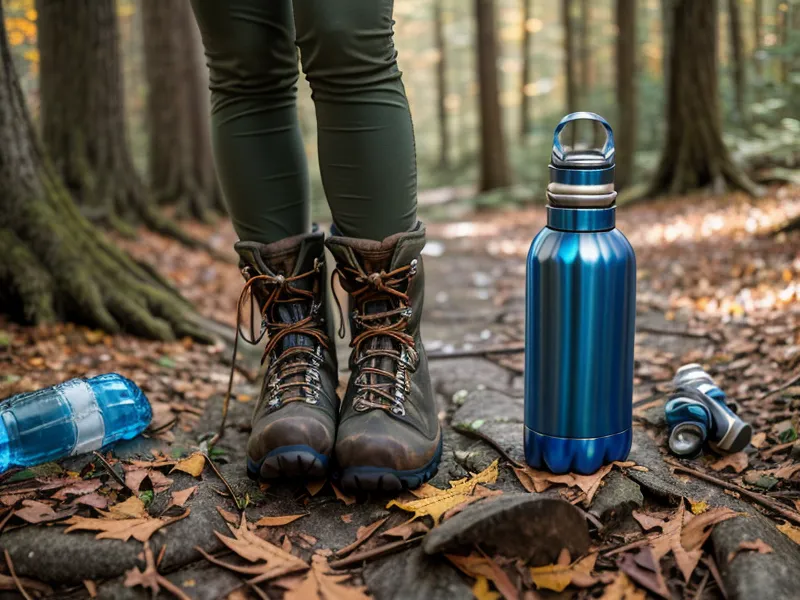
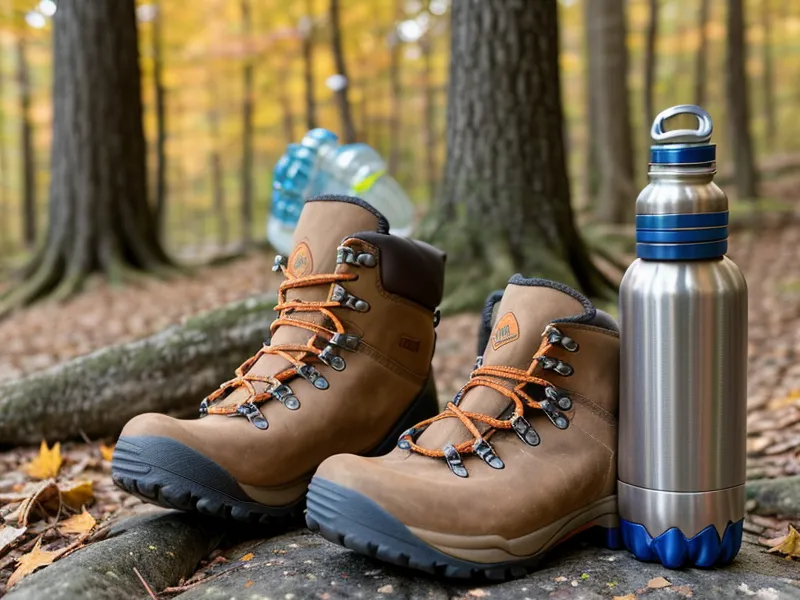
For years I wore stiff leather boots heavy enough to count as ankle weights, convinced they were protecting me. Trail runners replaced them on a wet morning when I'd forgotten my usual pair, and the switch stuck. I won't pretend to know the exact mechanics of why lighter mobility gear works better for my particular knees — I just know which pair leaves me walking normally the next day and which pair doesn't.
Here is the thing about poles — I used to think they were for people who'd given up, which says more about my ego at forty than anything about poles. They come on every hike now, steep or flat, mostly because the rhythm of planting them keeps me from overthinking every step. Ego-bruising as it was, how I reclaimed my weekend hikes really started the day I stopped trying to prove I didn't need the help.
Trading Stretch Time for Strength Time
Flexibility was supposed to be the answer — every wellness account on the internet insists you need to get more limber as you age, not less. For me it did the opposite. Stretching the tissue that was supposed to be holding my knee steady just made the joint feel like it was wobbling on a loose hinge. Strength training fixed more of that wobble than any hamstring stretch ever did — plain squats in the living room, lunges while the coffee brews, a resistance band looped around the door handle that gives and snaps back against my palm every time I pull it taut.
Supplements were a mixed bag. Glucosamine tablets did nothing I could ever point to on a trail — I took them faithfully for a stretch and never felt a difference worth mentioning, so they quietly dropped out of the routine. The strength work is what actually shows up in daily life: one morning not long ago, I bent down to tie my boot laces and came straight back up in the same motion, no bracing hand on the knee, no pause halfway. That's a better progress report than any supplement bottle ever gave me.
The Golf Version of the Same Trade-Off
A friend of mine who's golfed for decades made her own version of this same trade-off. She didn't quit the course when her hips started complaining — she swapped a full round for nine holes and traded her long practice-swing sessions for shorter ones that don't leave her stiff the next day. Same sport, smaller bites of it, same refusal to just stop. Hiking and golf don't share much, but the underlying decision is identical: protect enough of the activity that you still recognize yourself in it.
None of this means every steep trail is off-limits after fifty. It means the decision gets made on purpose instead of by habit. Chase the vertical gain on days when the joints feel strong going in and you can actually afford a slow day after — a long weekend, a light work schedule, whatever buys you the recovery time. Default to the mileage loop when your knees are already a little loud before you've even laced up, or when back-to-back active days matter more to you than one dramatic peak. Active aging isn't about picking one approach forever. It's about knowing which bill you're willing to pay on which morning, and choosing a trail — Noanet Woodlands or otherwise — that matches the answer.