A barbell loaded with plates never got my knees to stop clicking on the stairs. A rolled-up bath towel on the living room floor did. That's the short version of everything here: bodyweight exercises and controlled isometric holds did more for my knee mobility than any squat rack ever managed, and if joint health has been the sticking point in your own active-aging plan, the gym membership might not be the fix you think it is.
My position on this, without the runaround: heavy weight isn't a shortcut to strong knees once you're past fifty — it might be exactly what's working against you. What actually helps is smaller, controlled load: isometric holds, targeted hip work, and movement broken into pieces small enough to fit around a desk job. None of it needs a squat rack.
A compression sleeve was the first detour. It kept the joint warm and looked reassuring under a pair of hiking pants, and it did nothing for the actual weakness underneath. Real change didn't start until I'd had the real conversation with my doctor about joint pain and stopped trying to fix the problem with something I could just strap on.
Why Heavy Squats Aren't the Answer for Knee Mobility After 50
Whether your knees are dealing with actual cartilage thinning or just a slower lubrication problem is a distinction worth understanding on its own — not something I'll unpack here, since that's a different article's job. What happened when I put a bar across my shoulders and squatted anyway is simpler: my knees didn't feel stronger, they felt insulted.
Balance went first, then a sharp catch on the way down, and no trainer's cue about loading the joint properly changed that. Isometric work turned out to be the piece that actually stuck — muscle tension without the joint moving, like pressing your palm flat against a doorframe. Nothing shifts, but the muscle works the entire time.

The Terminal Knee Extension, Towel Version
Here's the exercise that replaced the squat rack entirely. Sit on the floor of whatever room has enough space — mine's the back bedroom that doubles as an office — roll a bath towel into a tight cylinder, and slide it under one knee. Press the back of that knee down into the towel, tightening the muscle on top of your thigh, and hold for a slow count of ten before releasing. Ten reps a side, no equipment beyond a towel and a bit of floor space.
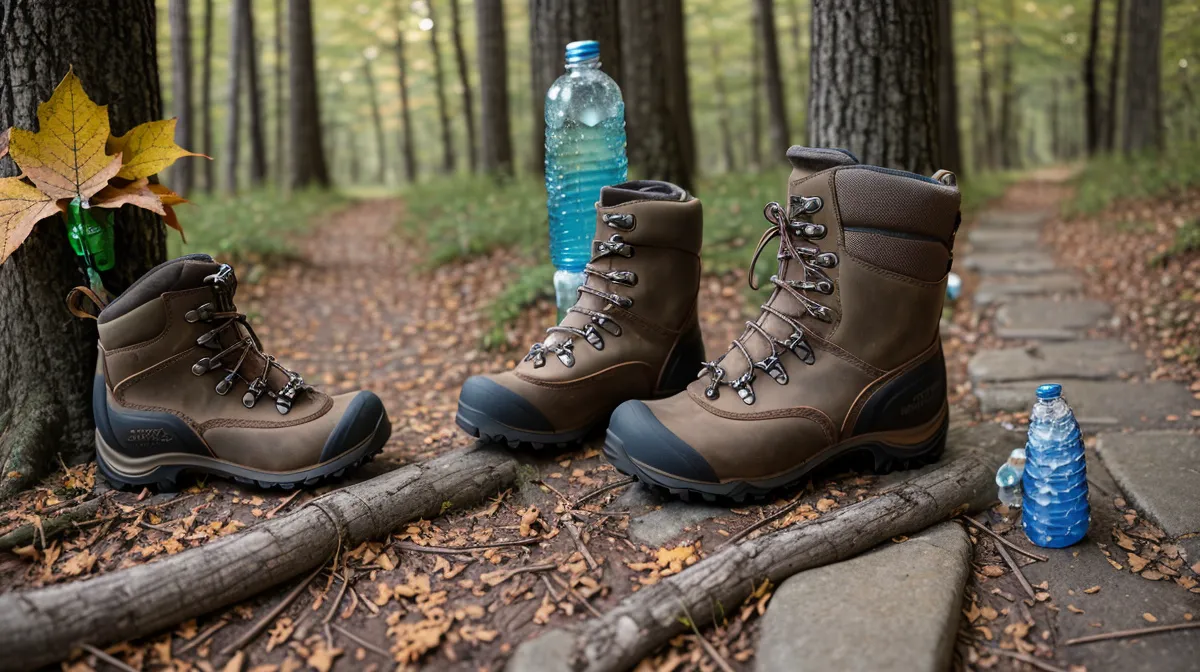
Boots factor into this too, in a roundabout way; how long the cushioning in a midsole actually holds up before it stops absorbing anything is its own rabbit hole, and one I'll leave for a different piece to cover. What I noticed from the towel exercise wasn't a number on a chart. It showed up at the Noanet Woodlands trailhead, bending down to double-knot my laces and standing back up in one motion. No hand braced on the knee, no pause halfway through.
What Do Your Hips Have to Do With It?
Your hips get blamed for a lot less than they deserve. Seated hip rotations became part of the routine, something I do on hold during phone calls or standing at the counter while something's on the stove. My knees have felt steadier since, even without a tidy clinical explanation for why. There's a nerve-activation angle to some of these hip movements too, one I'll leave for another piece to unpack properly.
Sitting at a desk all day sets up its own chain reaction through the hips long before you ever reach a trailhead, a problem substantial enough to deserve its own write-up rather than a mention here. Mobility and flexibility get used like synonyms, though they aren't the same thing, and that distinction matters more than a single sentence can cover. What matters for this routine is simpler: loose hips, steadier knees, fewer moments where a step downhill catches you off guard.
Turn Small Pauses Into Extra Reps
Full workouts aren't the only way this adds up. A shallow, controlled dip at the counter while the microwave runs works the same muscles as a lunge, just without a name on a workout app. Straightening one leg under the desk and holding it for the length of an email does something similar for the quad. Opening the hips while walking from the kitchen to the hall, instead of shuffling straight through, counts too. Small, but it counts.
Part of why those small movements matter comes down to synovial fluid needing motion to circulate. I'll let a different article explain the mechanics of that; here, what matters is that motion in small doses still counts. What I eat plays into how much swelling I'm managing on any given week too, though that's a bigger topic than one section can hold. I keep a running list of anti-inflammatory hiking snacks that travel well and don't need much prep.
My neighbor Jim, who I've mostly managed to talk into a couple of easy loops a month, will debate the lug pattern on a boot sole longer than he'll admit his own knees still bother him some mornings. Trekking poles come up in those conversations too, specifically how much load they actually take off your knees. That's worth its own breakdown, just not this one.
Small Loads Built More Stability Than Any Barbell
Noanet Woodlands became the test. Not the longer loop I used to do without thinking about it, just a manageable stretch, enough to see whether any of this actually held up outside a living room. It did. Steadier footing, and I finished the loop without once thinking about my knees instead of the trail.
A reader named Elaine, who's emailed me on and off since a piece I wrote about hiking with knee pain, always signs off asking which trail I'm eyeing next. Lately the honest answer is nothing longer than a few easy miles, and I've stopped treating that as a downgrade. Getting here took some adapting to the trail and learning not to mourn my old knees, but a shorter loop with steady footing beats a longer one spent bracing against every downhill.
Start with the towel exercise before you decide you need a whole new gym routine. Add the hip work once the towel exercise feels easy. And talk to your own doctor or a physical therapist before changing anything if your knees have been genuinely painful, not just stiff — I'm an office manager who likes the woods, not a medical professional, and this is what worked for my knees, not a prescription for yours.