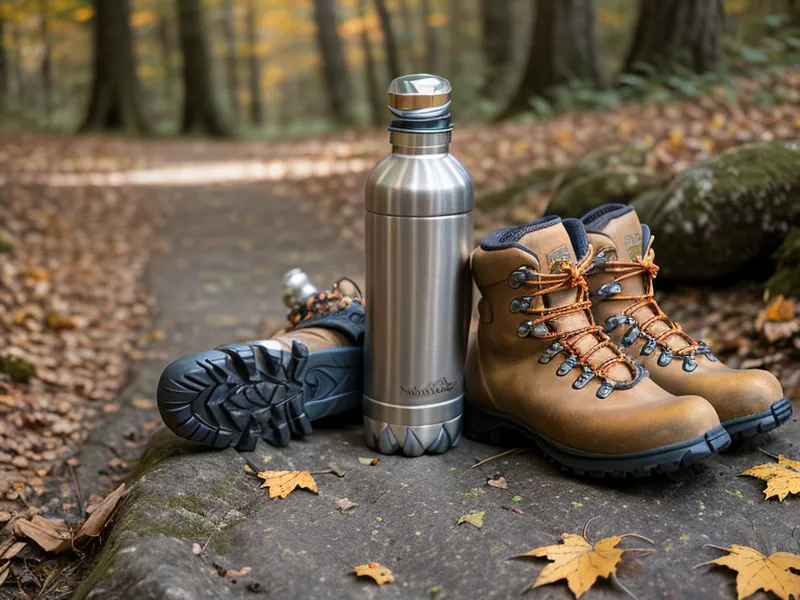
What if the brace you keep reaching for is actually the reason your knees never get any stronger? I don't have a full answer to that yet, but it's been sitting in my head since the last time I stood at the base of Skyline Trail wrestling a neoprene sleeve up over my leggings like it owed me money. The thing gripped my leg like a tourniquet, and my knees were stiff enough to argue with the very first switchback. A pack of trail runners flew past like they'd never had a joint complain about anything in their lives. Active aging apparently comes with its own gear closet now, and mobility after 50 was not supposed to mean negotiating with your own leg before you'd gone a hundred yards. Somewhere up the road, hikers at Blue Hills Reservation were probably having the exact same argument with their own knees, over their own version of joint health.
Quick note before we get into gear, this post contains affiliate links, and if you click through and buy something, I earn a small commission at no extra cost to you. I'm not a professional reviewer, just an office manager who's refused to give up her weekend miles, and every product mentioned below has actually ridden in my pack on real trails around here.
Why My First Fix Made Hiking Over 50 Worse, Not Better
Six months of pure fury, that was my first phase. Twenty years of hiking every weekend, and then my knees just decided they were done, seemingly overnight. My first instinct was to buy the heaviest, most industrial-looking hinge brace I could find, the kind that makes you look like you're bracing for a medieval battle just to walk to the mailbox. I figured if I strapped on enough plastic, the problem would go away.
Here's the thing I learned the hard way: a brace is a tool, not a cure. That neoprene compression sleeve from the trailhead story, the one that felt like a tourniquet, never actually fixed anything. It just squeezed hard enough that I stopped noticing the ache for the first mile, then my whole leg felt swollen and useless by the drive home. I'm not a doctor and definitely not a physical therapist, just a woman who spent real money on Velcro and neoprene before admitting my joints were stiff because they needed support from the inside, not just a tighter wrap on the outside. Talk to your own doctor before you overhaul your gear or your supplement routine, because everyone's version of "creaky" is different.
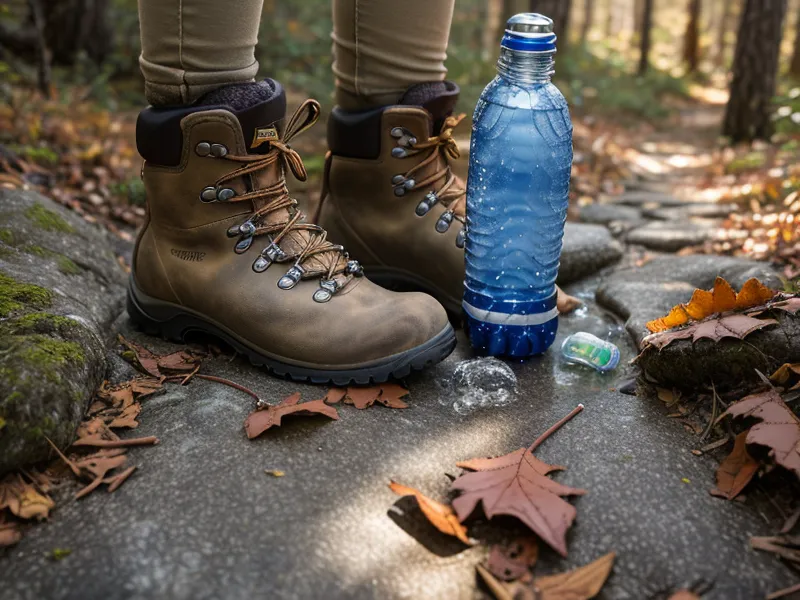
During that angry stretch, I kept chasing my thirty-year-old self and losing every time. I was trying to hike the way I did in my twenties and thirties, and my knees weren't interested in the comparison. Even the trail guides for a place like Blue Hills Reservation don't warn you about that part, they'll tell you about elevation and mileage, but nobody puts "your ego will take a hit" on the trailhead sign.
The Support-Versus-Strength Trade-Off
When you search for the best knee braces for hiking over 50, you'll find no shortage of "maximum stability" options promising to lock your knee in place. Here's the trade-off nobody puts on the box: the more a rigid brace does the stabilizing for you, the less your own muscles have to engage. Wear one every day and your legs eventually stop bothering to do the work themselves. That's a rough trade if the whole goal is staying strong enough to keep hiking into your seventies.
I found myself stuck in a catch-22 for a while. I needed enough support to get up the steeper climbs on Skyline Trail, but the more support I leaned on, the weaker my legs felt the next morning. What actually needed fixing wasn't just the joint itself, it was everything holding the joint up, and a brace alone was never going to solve that.
Quieting a Knee From the Inside
Somewhere around early spring I started paying attention to what actually makes a knee feel stiff, and it mostly comes down to the fluid that keeps the joint gliding instead of grinding. I didn't need a biology lecture to know mine had gone dry, my knees felt like two pieces of sandpaper rubbing together on every downhill step.
I started experimenting with JointVive first, trying the standard glucosamine-and-chondroitin combination most people reach for. It helped for a while, especially with a clicking sound I used to get on easy morning walks around the neighborhood. But the real shift came from Joint Genesis, which focuses on that same joint fluid rather than the cartilage itself. It took a couple of months of sticking with it before I noticed anything, the label practically warns you it's a patience game, but eventually the morning stiffness eased off enough that I stopped feeling like I needed a suit of armor just to walk the dog.
My Top Picks for Staying Trail-Ready
If you're ready to get back out there, what follows is the short list of things that actually earned a permanent spot in my gear bag this year. I've tried cheap drugstore sleeves and expensive custom rigs, and none of them stuck around the way these three did.
Joint Genesis, My Daily Habit
Joint Genesis isn't a brace at all, but it's the reason I can get away with a lighter one. By targeting the quality of that joint fluid instead of just the muscle or the plastic around it, Joint Genesis gave me back some of the glide feeling I'd missed since my thirties. Once I stayed consistent with it, I stopped dreading the first mile of every hike, the one where your knees are basically still waking up. It's one capsule a day, no shellfish involved, backed by a guarantee window long enough to actually test it through a full hiking season, and it mostly just works quietly in the background while I do the actual hiking.
JointVive: Does the Classic Combo Still Hold Up?
That classic route belongs to JointVive, if you'd rather stick with glucosamine and chondroitin. It includes turmeric too, which helps on the days I push a little too hard on a steep descent, and it's a solid foundational choice if you're just starting to think about joint support for the first time. Just double-check the label if you've got a shellfish allergy, because this one isn't free of it the way Joint Genesis is, and opinions are still split on how well glucosamine actually works depending who you ask.
Ageless Knees: Rebuilding Strength Without a Pill
You can't just swallow a capsule and expect to hike like an athlete again, eventually you have to relearn how to move. Ageless Knees is a simple, home-based program built around the nerves and muscles surrounding the knee, and it's what let me trade those bulky, restrictive braces for a much lighter compression sleeve. Strengthen the stabilizers enough, and the brace becomes a just-in-case instead of a daily requirement. It's one of the cheaper things in my gear bag, and the exercises are simple enough to squeeze in before you're out the door in the morning.
Do You Need a Brace, or a System?
By late summer I had something that actually resembled a system. Joint Genesis every morning, the short routine from Ageless Knees a few times a week, and a light compression sleeve saved for trails with real elevation. I also started using trekking poles to take some of the pressure off my hips on the way down, which made a bigger difference than I expected.
Around week eight, I was digging through the glovebox before a hike on Skyline Trail and found the ibuprofen bottle still sitting there, cap snapped shut, right about where it had been back in the spring. I hadn't touched it in weeks without noticing I hadn't touched it, which is a strange thing to feel proud of, almost as strange as the pair of trail shoes still parked on the card table in my back bedroom, waiting for whatever hike came next. Jim from next door, who joins me on the easier loops now and has opinions about literally every lug pattern on every boot sole I own, asked why I was grinning at a bottle of ibuprofen like it owed me an apology.
Speed is the trade I made, I'm not as fast as I was at thirty, and the big double-digit-mile loops are mostly off the table now. What's still true is that I'm out there, smelling the pine along Skyline Trail instead of just missing it from the couch. The lesson that actually stuck this year: the brace is the last piece, not the first one. Fix the fluid, rebuild the muscle, then let the brace be backup instead of a crutch, the order matters more than which brand you buy. A reader named Elaine Brosnan, who emailed me a while back describing a similar stretch of denial before a rethink of her own, always signs off asking which trail I'm hitting next. Lately the answer is Skyline.
If your knees are making every trail feel twice as long, skip the bigger brace and start with what's actually running dry underneath it. I'd start with Joint Genesis to get that lubrication back where it belongs, add in the strength work, and treat the brace as the last layer instead of the first. Your knees, and your weekend plans, tend to notice pretty quickly.
| Product | Rating | |
|---|---|---|
| Joint Genesis Top Pick | 9.4 | Read More → |
| JointVive | 8.5 | Read More → |
| Ageless Knees | 8.8 | Read More → |
Joint Genesis
Pros
- ▸ Targets the actual synovial fluid 'grease' for smoother movement
- ▸ Shellfish-free and vegan-friendly for easy digestion
- ▸ Significant reduction in morning 'sandpaper' stiffness
- ▸ Simple one-capsule daily routine
Cons
- − Requires consistent daily use for a few weeks to feel the full effect
- − Only available through their website, not at the local pharmacy